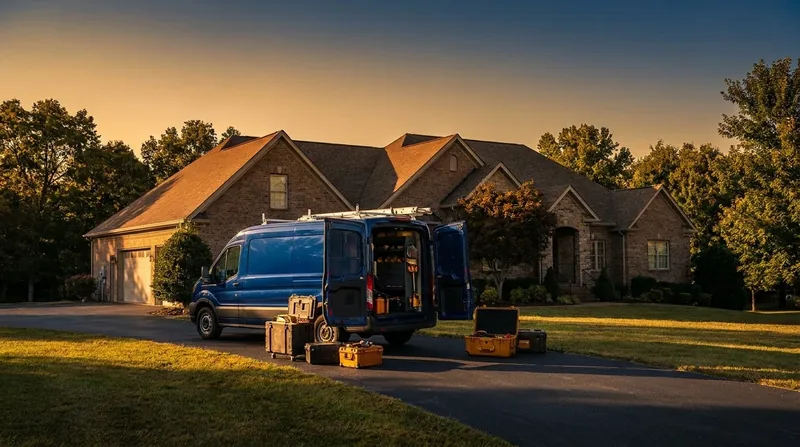
How to Start a Pest Control Business in California: SPCB Operator License, Branches and Company Registration
How to Start a Pest Control Business in California: SPCB Operator License, Branches and Company Registration
Starting a pest control business in California means working under two separate regulatory systems. Structural pest control, which covers buildings and wood-destroying pests, is regulated by the Structural Pest Control Board (SPCB). Non-structural pest control, such as lawn and ornamental treatments and rodent work outside structures, is regulated by the Department of Pesticide Regulation (DPR) and your county agricultural commissioner. Decide which side your work falls on before you spend money, because the licenses, paperwork and fees are different.
Disclaimer: This guide is informational content, not legal or tax advice. Fees, deadlines and requirements change. Confirm every figure with the agency named in each step. For complex situations, such as a company with multiple owners, a practice that mixes structural and non-structural work, or a decision about entity type, consult a qualified attorney or CPA.
What You Need Before You Start
Gather these items before you file anything. Most delays come from missing documents, not from the agencies themselves.
- A decision on which regime applies: structural (SPCB) or non-structural (DPR and county)
- Written proof of field experience, including employer names, dates and hours from a California registered pest control company. One year of experience equals 1,600 hours of field work or the equivalent, so keep detailed time records.
- Government-issued identification and a principal office address
- A list of every owner, partner, officer and shareholder who holds 10 percent or more of the company
- A California registered agent, either an individual who lives in California or a corporation that holds a Corporations Code 1505 certificate
- A proposed business name, plus $10 if you want to reserve it
- Quotes for liability insurance from carriers that can meet SPCB approval requirements
- A budget that covers exam, license and filing fees (see the fee table below)
Step 1: Learn the Three Structural Pest Control Branches
The SPCB divides structural pest control into three branches. Your license is limited to the branches you qualified in, so pick your branches with your future services in mind.
| Branch | What It Covers |
|---|---|
| Branch 1: Fumigation | Structural fumigation work |
| Branch 2: General pest | Structural pest control for pests other than wood-destroying organisms |
| Branch 3: Termite | Wood-destroying pests, using insecticides or structural repairs and corrections, excluding fumigation |
You can hold more than one branch. A combination license is still one license (Business and Professions Code 8560). If you plan to offer both general pest and termite work, you will need experience and exam credit in both branches.
Step 2: Meet the Operator License Requirements
There are three license types: operator, field representative and applicator. The operator license is the one that lets you run the practice, so most people starting a company pursue it. An operator applicant must meet these requirements:
- Be at least 18 years old
- Show experience in the employ of a California registered pest control company: 2 years for Branch 1, 2 years for Branch 2, and 4 years for Branch 3 (Business and Professions Code 8562)
- Show a period of licensed field representative experience in the branch: at least one year for Branches 1 and 2, and two years for Branch 3, or the equivalent
- Pass the operator exam
The operator exam covers English, building and safety laws, labor laws, the pest control chapter of the Business and Professions Code, pesticides, and the theory and practice of the branch you are testing for (Business and Professions Code 8565). Study materials and exam scheduling are handled through the SPCB, so check its official site for current procedures.
Step 3: Understand the Field Representative and Applicator Licenses
Most people enter the field through the field representative or applicator license before they qualify as an operator. Confirm the exact duties, experience rules and scope of each license with the SPCB, because the duties tied to each license type determine what you can do on a job site without an operator's oversight.
Fees effective July 1, 2025, are listed below. Do not budget from older fee schedules.
| License Type | Exam | License | Renewal |
|---|---|---|---|
| Operator | $100 | $150 | $150 |
| Field representative | $75 | $45 | $45 |
| Applicator | $60 | $35 | $35 |
You will also pay $5 for every wood-destroying organism activity filing. Check with the SPCB for any other fees that apply to your situation, including any company registration fee, because those amounts can change.
Step 4: Choose and Form Your Business Entity
Every California business registers its entity with the Secretary of State (SOS) through bizfile Online at https://bizfileonline.sos.ca.gov/. The SOS issues no business license. Information on entity types is on the SOS Business Programs page at https://www.sos.ca.gov/business-programs.
Two points matter for pest control. California does not allow a domestic series LLC. An LLC also cannot render a licensed professional service, and professional corporations are used instead. If you are unsure whether your planned services fall under that rule, ask an attorney before you file.
Limited Liability Company (LLC)
- Articles of Organization (Form LLC-1): $70
- Name reservation: $10 for 60 days, not renewable for consecutive periods
- Name must include "limited liability company," "L.L.C." or "LLC" ("Limited" may be "Ltd." and "company" may be "Co.") and may not include "bank," "trust," "trustee," "incorporated," "inc.," "corporation" or "corp."
- Processing: online filings are normally processed within about 5 business days or less. Paper filings take 10 or more business days.
- Expedited options: 24-hour for $350, same-day for $750 if received by 9:30 a.m., and 4-hour for $500 (drop-off only, precleared)
Corporation
- Articles of Incorporation: $100
- A corporate name needs no designator. Only close corporations use one.
- A newly incorporated or qualified corporation owes no $800 minimum franchise tax in its first taxable year, so confirm how this applies to you with the Franchise Tax Board (FTB) before you budget.
Registered Agent and California Office
A California LLC or corporation must keep an agent for service of process. The agent must be an individual who lives in California or a corporation with a Corporations Code 1505 certificate. An LLC must also keep an office in California. The office does not have to be a place of business activity.
Ongoing Costs for an LLC and a Corporation
Your filing costs do not end at formation. Plan for these recurring items:
- LLC Statement of Information (Form LLC-12): $20, due within 90 days of filing the articles, then every two years during the six-month window ending on the last day of the anniversary month. If you miss it, the FTB assesses a $250 penalty after an SOS notice.
- Corporation Statement of Information (Form SI-550): $25, due within 90 days of filing the articles, then every year.
- LLC franchise tax: Every LLC owes the $800 minimum annual franchise tax from its first year if it was organized or registered in 2024 through 2026. An LLC whose first taxable year begins in 2027, 2028 or 2029 pays $400 in year one under RTC 17941(g)(2). Confirm that amount with the FTB.
- LLC fee: Once California-source total income reaches $250,000, $500,000, $1,000,000 or $5,000,000, the LLC fee is $900, $2,500, $6,000 or $11,790, respectively.
Corporations face a different structure. A corporation's first-year minimum tax is waived for newly incorporated or qualified corporations, and S corporations pay 1.5 percent of net income with an $800 minimum. Ask a CPA how these rules apply to your ownership setup.
Step 5: Register Your Company With the SPCB
Every company that practices structural pest control must register with the SPCB (Business and Professions Code 8610). Your application must list the owner, partners or officers, and any shareholders with 10 percent or more, plus the principal office address.
Liability insurance is a hard requirement. The SPCB will not issue a company registration without evidence of a liability insurance policy that the board has approved and that is in force when the registration is issued. The board must receive 10 days' notice of any cancellation or change (Business and Professions Code 8690). The policy must provide minimum limits of $500,000 for any one loss of bodily injury and $500,000 for property damage (Business and Professions Code 8692). A registered company may not operate without that policy (Business and Professions Code 8691).
Registrations apply to the location they were issued for. Each branch office needs a supervisor who holds a license (Business and Professions Code 8611 and 8612). Check with the SPCB for the current company registration fee, since the fee is not listed here.
Step 6: Register for Taxes and Employment
Register with the California Department of Tax and Fee Administration (CDTFA) if you sell taxable goods. The seller's permit is free. Sales tax is 7.25 percent statewide, and with district taxes, city rates run from 7.25 percent to 11.75 percent. The resale certificate has no required form. Learn more at https://www.cdtfa.ca.gov/.
If you hire employees, register with the Employment Development Department (EDD) and carry workers' compensation insurance (Labor Code 3700). California's minimum wage is $16.90 in 2026 and $17.40 starting January 1, 2027. This is a secondary source figure, so verify it with the state before you set pay rates.
Step 7: File a Fictitious Business Name Statement
If you operate under any name other than your legal entity name, you need a Fictitious Business Name Statement. File it with the county clerk-recorder in the county of your principal place of business. If you have no principal place of business in California, file in Sacramento County.
- Deadline: Within 40 days of starting to do business under the name
- Statutory fee: $10 plus $2 per additional name or owner (Business and Professions Code 17929). Counties charge more. For example, Tehama County charges $31 plus $5 for each additional name.
- Publication: Publish in a newspaper once a week for four weeks. The publication fee is separate from the filing fee.
- Expiration: The statement expires after five years.
Learn more at https://www.sos.ca.gov/business-programs/business-entities/fictitious-business-names.
Step 8: Check Local Business Tax and County Rules
California has no general statewide business license. Most cities charge a local business tax or registration certificate. Of the 483 cities, 445 report revenue from one. There is no common formula, so the answer depends on the city where you operate. Counties license only regulated activities. Check your city's business license office and your county's requirements before you take on customers in a new area.
Step 9: Add Non-Structural Licensing If Your Work Requires It
Non-structural pest control for hire, such as rodent work outside structures and lawn and ornamental treatments, follows a different path.
- DPR pest control business license: You may not advertise, solicit or operate as a pest control business without one from the DPR director (Food and Agricultural Code 11701). Check with DPR for current fees.
- County registration: Register with the county agricultural commissioner for the current calendar year in each county where you operate (Food and Agricultural Code 11732).
- Maintenance gardener category: If you are a maintenance gardener who does pest control for hire as an incidental part of gardening, you must qualify for a pest control business license in the maintenance gardener category (Food and Agricultural Code 11704). That requires passing the certified commercial applicator exams in laws and regulations and in landscape maintenance. This category is limited to ornamental and turf plantings indoors, in commercial parks, or surrounding structures.
A Qualified Applicator Certificate does not by itself let a lawn-care business sell pest control. Confirm your category with DPR before you advertise or quote a treatment.
This guide does not cover wildlife trapping or cannabis-related pest rules.
Fee Summary
| Item | Amount | Agency |
|---|---|---|
| LLC Articles of Organization (LLC-1) | $70 | Secretary of State |
| Corporation Articles of Incorporation | $100 | Secretary of State |
| Name reservation (60 days) | $10 | Secretary of State |
| LLC Statement of Information (LLC-12), every two years | $20 | Secretary of State |
| Corporation Statement of Information (SI-550), every year | $25 | Secretary of State |
| Operator exam, license, renewal | $100, $150, $150 | SPCB |
| Field representative exam, license, renewal | $75, $45, $45 | SPCB |
| Applicator exam, license, renewal | $60, $35, $35 | SPCB |
| Wood-destroying organism activity filing | $5 each | SPCB |
| Fictitious business name filing | $10 plus $2 per additional name or owner, plus county extras | County clerk-recorder |
| Company registration | Check with SPCB | SPCB |
| Non-structural pest control business license | Check with DPR | DPR |
Common Mistakes to Avoid
- Starting work before SPCB registration and insurance. A registered company may not operate without the required policy.
- Assuming one license covers every branch. Your license is limited to the branches you qualified in.
- Using an LLC for a licensed professional service. Ask about professional corporations before you file.
- Missing Statement of Information deadlines. The FTB penalty is $250 after an SOS notice.
- Forgetting the franchise tax. LLCs owe the $800 minimum annual franchise tax from their first year if organized or registered in 2024 through 2026.
- Skipping the city business tax. Most cities charge one, and the rules vary.
- Letting the fictitious name deadline slip. The 40-day window starts when you begin doing business under the name.
- Treating a gardener's pest control as automatically allowed. The maintenance gardener category is narrow.
Tips for a Smoother Launch
- Start your experience log now. Hours that are not documented in detail are hard to verify later.
- Request insurance quotes early and ask the carrier whether the policy meets SPCB approval before you buy it.
- Use free advising from the California Small Business Development Center network at https://californiasbdc.org/.
- Verify every fee and deadline on the agency website on the day you file, because amounts change.
What to Expect
Timelines vary, so treat the figures below as planning estimates rather than guarantees. Online LLC filings are typically processed within about 5 business days or less, while paper filings may take 10 or more business days. Exam scheduling, SPCB review and DPR or county registration can take longer, depending on agency workload and how complete your application is. Applicants who gather experience records, insurance and entity documents before they file may reduce the number of back-and-forth requests they receive. No outcome is guaranteed.
Official Resources
- Secretary of State Business Programs: https://www.sos.ca.gov/business-programs
- bizfile Online: https://bizfileonline.sos.ca.gov/
- Business entity search: https://bizfileonline.sos.ca.gov/search/business
- Name availability: https://www.sos.ca.gov/business-programs/business-entities/name-availability
- California Department of Tax and Fee Administration: https://www.cdtfa.ca.gov/
- Sales and use tax permit information: https://www.cdtfa.ca.gov/taxes-and-fees/sales-use-tax.htm
- California Small Business Development Centers: https://californiasbdc.org/
- Structural Pest Control Board and Department of Pesticide Regulation: find the official pages through the state's official website, and confirm current fees and forms there
Reminder: This guide is informational content, not legal or tax advice. Consult a qualified attorney or CPA for decisions about your entity, taxes and licensing.
Keep exploring: related California guides
- How to Start a Landscaping Business in California
- How to Start a Tree Service Business in California
- How to Start a Junk Removal Business in California
- How to Start an Auto Detailing Business in California
- How to Start an LLC in California (2026 Guide)
- How to Get a Business License in California (2026)
- How Much Does It Cost to Start an LLC in California? (2026)
- All California business types
- Every California guide in one place