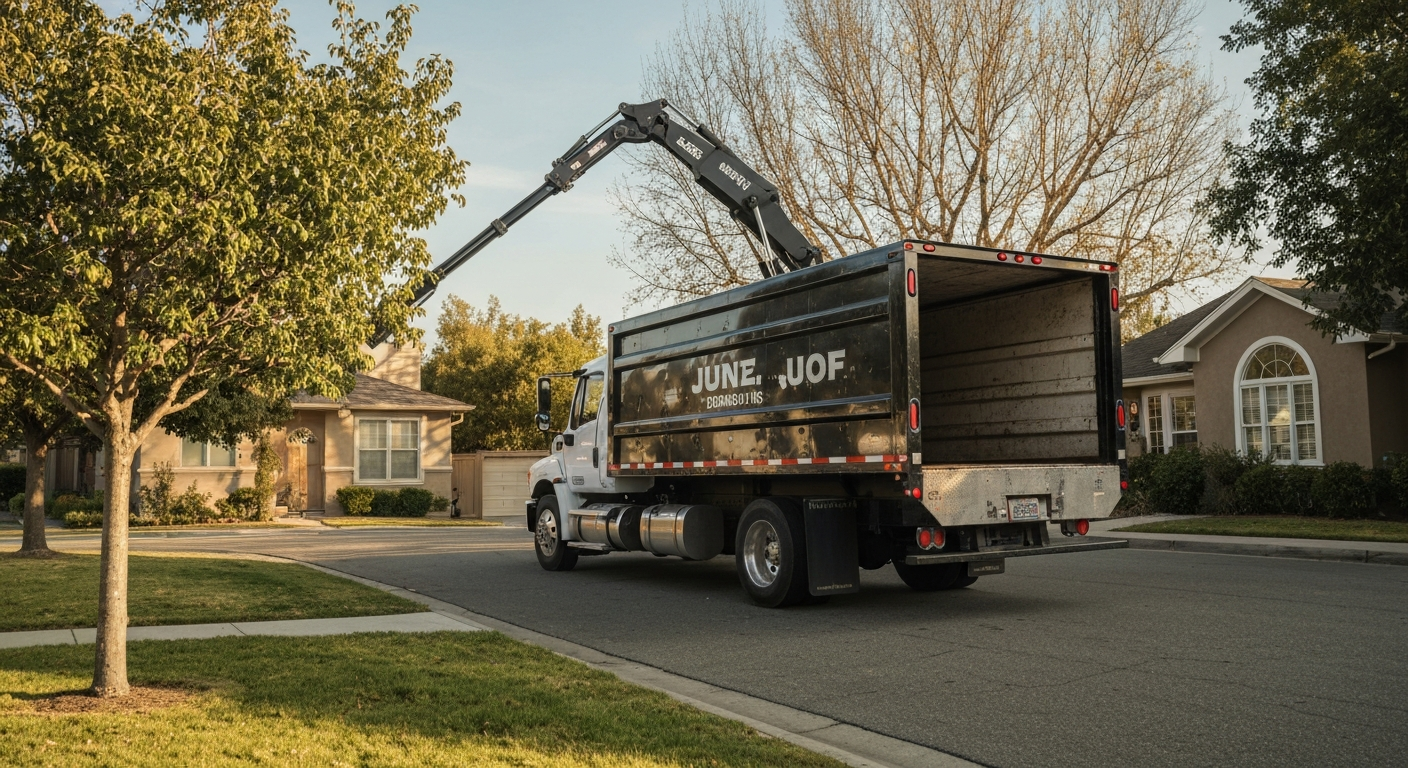
How to Start a Junk Removal Business in California
How to Start a Junk Removal Business in California
California has one of the highest rates of household and commercial waste generation in the country, and people are always willing to pay someone to haul it away. But running junk removal here is a different animal than in most states. The permitting is layered, the environmental rules are strict, and the disposal costs are higher than the national average. Know that going in, price your jobs accordingly, and you can build a solid business. Ignore it, and you’ll either get fined or watch your margins evaporate.
Here’s exactly what you need to do it legally and profitably.
Business Structure
Before the permits, you need a legal entity. Most junk removal operators form an LLC, which gives you liability protection without the complexity of a corporation.
In California, that means filing Articles of Organization (Form LLC-1) with the Secretary of State at bizfileOnline.sos.ca.gov. The filing fee is $70. After that, you’ll pay $800 every year to the Franchise Tax Board as the California LLC franchise tax — no exceptions, no first-year grace period. The AB 85 exemption that used to waive the first-year fee expired December 31, 2023. You owe it.
Get your EIN from the IRS at irs.gov/ein — free, takes about five minutes.
Licensing and Permits
This is where California gets complicated. You’re not just getting a business license and calling it done. You’re dealing with multiple layers of jurisdiction.
City Business License
Every city in California requires a business license to operate commercially within its limits. The fee varies — typically $50–$150/year for a small operation, though some cities charge more. You apply through your city’s finance or business licensing department.
If you’re operating out of multiple cities, or if your customers are spread across a county, check whether individual cities require you to register there too. Some do. Some don’t. It depends entirely on the municipality.
Waste Hauler Permit
This is the one most people miss. California cities and counties require a separate waste hauler permit — also called a solid waste collection permit — for any business hauling waste for hire. This is not your business license. It’s specific to the act of transporting other people’s garbage.
Requirements vary significantly by jurisdiction. Los Angeles County, for example, has a franchise system for unincorporated areas administered by the county’s Department of Public Works. The City of San Jose requires a Solid Waste and Recyclable Materials Collection Services permit. San Francisco has an exclusive franchise arrangement with Recology, which complicates what independent haulers can legally do in the city limits.
The point: before you make a single pickup, contact your county’s Department of Public Works or your city’s Public Works/Sanitation department and ask specifically about waste hauler permit requirements. Don’t assume. The rules in Sacramento County differ from the rules in Orange County differ from the rules in Fresno.
CalRecycle
At the state level, CalRecycle oversees solid waste management and has authority over how waste is handled, transported, and disposed of. CalRecycle maintains a database of permitted solid waste facilities and sets minimum standards that local jurisdictions must meet or exceed.
You won’t typically register directly with CalRecycle as a hauler — that relationship is managed through your local jurisdiction. But you’re operating within a framework CalRecycle sets. If you’re ever considering operating a transfer station, drop-off facility, or any kind of processing operation, that’s where CalRecycle’s permit requirements become directly relevant to you.
CSLB Contractor License
If your junk removal work includes demolition — tearing out old decks, removing sheds, knocking down interior structures — and the total job (labor plus materials) exceeds $500, California law requires a CSLB contractor’s license. No exceptions.
The Contractors State License Board (cslb.ca.gov) oversees this. Getting licensed involves four years of journey-level experience, passing trade and law exams, a $450 application fee, a $200–$350 initial license fee, and a $25,000 contractor bond. It’s not a quick process.
For most pure junk haulers who are carrying stuff out of a house or clearing a yard — not demolishing structures — this won’t apply. But if you’re marketing “junk removal and demo,” you need the license before you swing a hammer.
Environmental Compliance
This section is what separates California from other states. The environmental rules here are real, they’re enforced, and they affect your day-to-day operations.
AB 1826: Mandatory Commercial Organics Recycling
AB 1826 requires businesses generating a certain volume of organic waste to recycle it. Organic waste means food scraps, yard waste, and food-soiled paper. When you’re hauling a load from a restaurant, a grocery store, or a commercial property, that load may contain organic material that cannot legally go straight to a landfill.
What this means practically: you may need to sort loads at the job site or at a transfer station, diverting organic material to a certified composting or anaerobic digestion facility. Some landfills in California accept commingled loads and sort on-site — but you pay for that service, and it’s reflected in your tipping fees. Others won’t accept high-organic loads at all.
If you’re doing residential junk removal only, AB 1826 is less of a daily issue. But the moment you take commercial accounts — office cleanouts, restaurant equipment removal, apartment complex cleanouts — you need to understand what’s in your loads.
Hazardous Waste
CalEPA’s Department of Toxic Substances Control (DTSC) has strict rules about what you can legally haul and how it must be disposed of. Paint, solvents, pesticides, batteries, fluorescent bulbs, motor oil — these are all considered hazardous waste.
As a junk hauler, you’ll run into this constantly. The legally safe answer: don’t accept it. Many operators include explicit exclusions in their service agreements for hazardous materials and direct customers to their county’s household hazardous waste (HHW) program instead. California counties are required to operate HHW collection programs, and customers can drop this stuff off for free.
If you want to handle hazardous waste, you need specific DTSC permits. That’s a separate business category entirely, with a much higher compliance burden.
E-Waste
California’s Electronic Waste Recycling Act prohibits landfilling covered electronic devices — primarily screens and monitors, but the list extends to many electronics. You cannot dump a flatscreen TV or a computer at a standard landfill. It’s illegal.
The practical solution: bring e-waste to a certified e-waste collector or recycler. CalRecycle maintains a list of certified collectors at calrecycle.ca.gov. Some recyclers accept drop-offs for free or a small fee. Others charge by weight. Either way, it’s a separate trip from your normal landfill run, which adds time and cost. Factor it into your pricing.
Mattress Recycling
The California Mattress Recycling Council operates the Bye Bye Mattress program, funded by a fee consumers pay at the point of sale. Under the California Mattress Recycling Act, mattresses must go to certified recyclers — not landfills.
You can find drop-off locations at byebyemattress.com. Some locations accept mattresses for free. Others charge. Either way, you cannot legally landfill a mattress in California, and junk removal companies pick up a lot of mattresses.
Again: price accordingly. If a job includes three mattresses, you have a separate disposal step that costs time and potentially money.
Cost Structure
California junk removal has higher startup and operating costs than most states. Not impossibly high — but you need to run the numbers honestly before you commit.
LLC Formation and Franchise Tax
Filing your LLC costs $70. Then $800 every year, starting with your first year, due to the Franchise Tax Board by the 15th day of the 4th month after formation. That’s not a one-time thing — it’s an annual floor tax that every California LLC pays regardless of revenue. Even if you make zero dollars your first year, you owe $800.
Budget for it. It catches people off guard.
Workers’ Compensation Insurance
California requires workers’ comp for every employee, with no exceptions and no minimum employee count threshold. The moment you hire someone — even one part-time helper — you need a policy. Workers’ comp for physically demanding labor like junk removal typically runs $10–$20 per $100 of payroll, depending on your claims history and insurer.
Operating as a solo operator, you’re not legally required to carry it for yourself, but it’s worth considering. One back injury without coverage means out-of-pocket medical bills and lost income.
Disposal and Tipping Fees
This is the line item that defines your margins. California landfills charge $50–$100+ per ton to accept waste, and in some counties (Bay Area, parts of LA), you’ll see rates at the high end or above. The national average is closer to $55/ton — California’s costs are consistently higher.
A typical junk removal truckload runs 1–3 tons depending on density. At $75/ton and 2 tons per load, you’re paying $150 just to dump — before fuel, labor, equipment wear, and permits. That’s why California junk removal jobs need to be priced at $250–$500+ for a full load, not the $99 “any junk, any amount” pricing you see advertised in lower-cost states.
Sort your loads. Metals can go to a scrap yard for money (or at least free disposal). Clean cardboard often dumps for less. Separating materials at the job site takes time, but it can meaningfully reduce your tipping fees per load.
Insurance
General liability insurance for a junk removal operation runs $2,000–$6,000 per year in California, depending on revenue, coverage limits, and insurer. You need it. You’re on customers’ property, you’re loading heavy items, and accidents happen.
If you’re driving a commercial vehicle, your personal auto policy doesn’t cover business use. You need commercial auto insurance. Get quotes from insurers who specialize in small contractors and service businesses.
Equipment
You can start lean. A used dump trailer ($5,000–$15,000) and a capable truck ($10,000–$30,000) is the minimum viable setup. A 1-ton or 3/4-ton pickup with a 16-foot dump trailer handles the vast majority of residential jobs.
As you grow, you’ll want a dedicated dump truck — either a 10-yard box truck or a roll-off setup for commercial work. But don’t finance a $60,000 truck before you have customers.
Straps, dollies, work gloves, safety equipment — budget a few hundred dollars for gear. Not glamorous, but necessary.
Total Startup Estimate
Running lean:
- LLC filing + first-year franchise tax: ~$870
- Business license(s): ~$150
- Waste hauler permit: varies, budget $100–$500
- General liability insurance: ~$2,000–$3,000 (first year)
- Used truck: $10,000–$20,000
- Dump trailer: $5,000–$10,000
- Working capital (fuel, disposal fees, gear): $2,000–$5,000
Total: $20,000–$40,000 to start lean. If you buy a newer truck or add a second vehicle early, you’re looking at $40,000–$50,000 or more.
What to Do First
Get the permits before you take your first job. The sequence:
- Form your LLC with the Secretary of State
- Get your EIN from the IRS
- Apply for your city business license
- Contact your county’s Department of Public Works about waste hauler permits
- Get liability and commercial auto insurance quotes (you’ll need them before hauling anyway)
- Open a business bank account
- Set up your disposal accounts at local landfills and certified recyclers
California’s rules are more work than other states. But the demand is real, the market is large, and operators who understand the compliance landscape have a genuine advantage over the fly-by-night trucks that don’t. Price your jobs to cover actual California costs — disposal, insurance, the franchise tax — and you’ll build something that actually works.