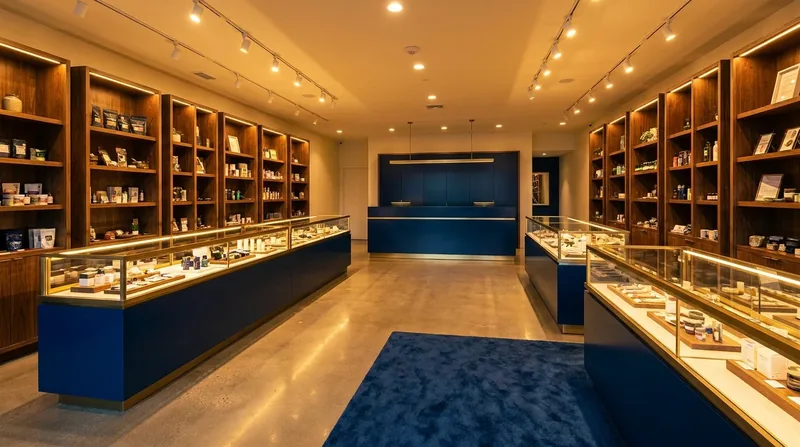
How to Start a Cannabis Dispensary in California: DCC License Fees From $2,500 and 238 Places Allowing Retail
How to Start a Cannabis Dispensary in California: DCC License Fees From $2,500 and 238 Places Allowing Retail
If you want to open a cannabis dispensary in California, plan on two separate approvals. The first comes from the Department of Cannabis Control (DCC), which issues the state license. The second comes from the city or county where the store will operate. The state license does not override a local ban, so a city that prohibits retail can block an otherwise qualified applicant. That is why the process starts with location, not paperwork.
This guide follows the order that works in practice: confirm that local retail is allowed, form your business, register with the state, secure local authorization, apply to DCC, and budget for state fees and taxes. It does not cover build-out costs, local application fees, or how long DCC takes to review an application. Confirm those directly with the agencies involved.
Informational content only. This article is not legal, tax, or financial advice. State and local cannabis rules change often. Verify every figure with the agency named before you rely on it, and consult a qualified cannabis attorney and a CPA before you sign a lease or commit money.
Why Local Approval Comes First
DCC data updated in February 2026 covers 540 cities and counties in California. Here is how they break down:
- 256 (47 percent) allow at least one type of cannabis business.
- 284 (53 percent) allow no cannabis business at all.
- 302 (56 percent) allow no retail.
- 238 allow retail, which is the list you need for a storefront.
Those 238 jurisdictions are your starting list. Your job is to find out which of them has available zoning, a workable application process, and a location you can actually secure. Our city-by-city guide covers the local requirements in detail. Use it to narrow your list, and do not treat a city's general openness to cannabis as permission to open a dispensary there.
Materials and Documents You Need
Gather these before you start filing. Some are needed at the state level, others at the local level.
- Entity formation documents. For an LLC, that is Articles of Organization (Form LLC-1), which costs $70 to file with the Secretary of State.
- Name reservation (optional). A name reservation costs $10 and lasts 60 days.
- A California agent for service of process. This is an individual who lives in California or a corporation with the required certificate. The LLC also needs an office address in California.
- A federal Employer Identification Number (EIN) from the IRS.
- A seller's permit from the California Department of Tax and Fee Administration (CDTFA). The permit is free.
- A signed lease or purchase agreement for a site in a jurisdiction that allows retail, plus written confirmation of zoning from the local planning office.
- The local application packet from the city or county, and any local business tax registration it requires.
- Owner, financial, and background information as listed in DCC's current application materials. Download the list from DCC rather than relying on a summary.
- A professional team: a cannabis-experienced attorney and a CPA who understands cannabis tax treatment.
Step-by-Step Process
Step 1: Find a Jurisdiction That Allows Retail
Start with the 238 jurisdictions that allow retail, then narrow the list by zoning, available space, and the local application process. Call the planning department, read the municipal code on cannabis retail, and ask whether the city or county uses a competitive selection process, a lottery, or a standard permit. Some jurisdictions limit the number of retail permits, so a city that allows retail may still have no open slot.
Step 2: Form Your Business Entity
Most applicants form a limited liability company. File Articles of Organization (Form LLC-1) through bizfile Online at the Secretary of State. Online filings are normally processed in about 5 business days or less. Paper filings take 10 or more business days. Expedited options from the Secretary of State are a 24-hour filing for $350, a same-day filing for $750 if received by 9:30 a.m., and a 4-hour drop-off option for $500.
Your name must include "limited liability company," "L.L.C.," or "LLC," and it cannot contain words such as "bank," "trust," "incorporated," "inc.," "corporation," or "corp." Check availability at the Secretary of State's name availability page. If you will operate under a different name than your LLC, file a fictitious business name statement with the county clerk within 40 days of starting business. California does not allow a domestic series LLC, so plan your ownership and asset structure around a standard LLC.
Within 90 days of filing the articles, file a Statement of Information (Form LLC-12). It costs $20 and is due every two years during the filing window, which ends on the last day of your anniversary month. The Franchise Tax Board assesses a $250 penalty if it is missed after a Secretary of State notice. A limited liability company organized in 2026 owes the $800 minimum annual franchise tax from its first year. Confirm your first-year amount with the Franchise Tax Board, because rules differ for entities whose first taxable year begins in 2027 through 2029.
Step 3: Register With the State Tax and Employer Agencies
California has no general statewide business license. The Secretary of State issues none, and the seller's permit is not a business license. Instead, register with the agencies that match your operations:
- CDTFA: Apply for a seller's permit if you sell taxable goods, which a dispensary does. The permit is free. Start at the CDTFA website.
- Employment Development Department (EDD): Register if you will have employees. Confirm the state minimum wage with the Department of Industrial Relations before budgeting payroll. A secondary source lists $16.90 per hour in 2026 and $17.40 from January 1, 2027, so verify both figures with that agency. For payroll registration, see the EDD website.
- Franchise Tax Board: Handle your LLC's annual tax obligations through the FTB, including the $800 minimum tax and any LLC fee that applies once your California-source income reaches a threshold.
Step 4: Secure Local Authorization
This is the step that decides whether your project survives. Submit the local application, complete any zoning or land-use review, and obtain written approval before you commit to the lease. Local requirements vary widely. Cities and counties also charge their own business taxes or registration fees, and counties license only regulated activities. Ask for the complete list of local requirements in writing, including what documents DCC will need to see as proof of local approval.
Step 5: Plan for Environmental Review
DCC lists an environmental review step under the California Environmental Quality Act (CEQA). Read DCC's pages on this requirement early, because it can affect your site and your timeline. DCC also describes an equity fee relief program for qualifying applicants. Read the program requirements on DCC's site before you assume you will pay the full fee schedule.
Step 6: Apply for the DCC Retail License
Every retail license carries a $1,000 application fee. Submit your application through DCC's current process and include the local authorization you secured in Step 4. Check DCC's site for the current application forms and instructions, since the document list can change. Do not give DCC incomplete or inconsistent information about owners, financing, or your premises, because those errors slow the process more than almost anything else.
Step 7: Budget for Annual State License Fees
Once licensed, a retailer pays an annual license fee based on gross annual revenue. Fees are calculated on total income for the 12-month licensing period before expenses. Use the schedule below to plan your first year:
| Gross Annual Revenue | Annual License Fee |
|---|---|
| Up to $500,000 | $2,500 |
| $500,001 to $750,000 | $5,500 |
| $750,001 to $1,000,000 | $7,500 |
| $1,000,001 to $1,500,000 | $11,000 |
| $1,500,001 to $2,000,000 | $14,500 |
| $2,000,001 to $3,000,000 | $22,500 |
| $3,000,001 to $4,000,000 | $30,500 |
| $4,000,001 to $5,000,000 | $38,500 |
| $5,000,001 to $6,000,000 | $46,500 |
| $6,000,001 to $7,500,000 | $57,000 |
| Above $7,500,000 | $96,000 |
If you underpay, DCC may require the unpaid balance plus a penalty of 50 percent of the correct fee. Track gross revenue monthly so you can see which tier you are heading toward.
Other license types have their own fee tables on DCC's site. Here is the summary:
- Microbusiness: $5,000 to $300,000 per year, depending on revenue.
- Distributor: $1,500 to $240,000 per year, depending on revenue.
- Non-storefront retail (delivery), cultivation, and manufacturing: separate fee tables on DCC's site. Confirm those fees with DCC directly.
Step 8: Set Up Sales and Excise Tax Reporting
Cannabis is excluded from the food sales tax exemption under Revenue and Taxation Code 6359, so retail cannabis sales are taxable at the local sales tax rate. The statewide base rate is 7.25 percent, and with district taxes city rates run from 7.25 percent to 11.75 percent. Your sales tax rate depends on the location of your store.
The state cannabis excise tax is reported at 15 percent from October 1, 2025, down from 19 percent. Sources disagree on how long that rate lasts. Ask the CDTFA for the current rate and any scheduled change, and do not build your pricing model on an assumed end date. Set up point-of-sale tax settings and monthly filing from day one, and have your CPA review them before you open.
Step 9: Get Professional Advice on Banking and Federal Tax
Cannabis remains illegal under federal law. Before you open, speak with a lawyer and a tax professional experienced in cannabis about banking access and federal tax treatment. Those questions affect how you pay vendors, how you handle deposits, and how you file, and they are not answered by state fee schedules.
Hemp: What You Cannot Do Yet
Do not plan to sell hemp products through a cannabis retail license. DCC says licensed cannabis retailers cannot sell hemp products until new rules under AB 8 take effect. AB 8 also extends the cannabis excise tax to certain hemp-derived retail sales beginning January 1, 2028. If your business model includes hemp-derived products, read our smoke shop guide and confirm the rules with DCC and the CDTFA.
Common Mistakes to Avoid
- Signing a lease before local approval. A state license does not override a local ban, and a signed lease does not guarantee permission to operate.
- Assuming a city that allows cannabis allows retail. Many jurisdictions permit other cannabis businesses but prohibit storefronts.
- Budgeting only for the $1,000 application fee. Annual state fees, local taxes, and sales tax systems all add to your first-year cost.
- Forgetting the Statement of Information. Missing the LLC-12 deadline can add a $250 penalty.
- Misreading the franchise tax. A limited liability company organized in 2026 owes the $800 minimum from its first year, and the LLC fee applies once your California-source income reaches a threshold.
- Underreporting revenue. State license fees are based on gross revenue, and underpayment carries a penalty of 50 percent of the correct fee.
- Skipping the environmental review. Read DCC's CEQA pages early so the requirement does not surprise you after you have committed to a site.
- Relying on outdated rates. The excise tax and hemp rules are changing. Check the CDTFA and DCC before every filing period.
What Results to Expect
No one can promise approval, a specific timeline, or a revenue figure. Outcomes depend on the jurisdiction, the site, the completeness of your application, and market conditions. A well-prepared applicant in a city or county that allows retail may be positioned to move through the process with fewer delays, and an applicant who skips local research often finds that work starts over. Plan for a process that takes longer than you expect, keep reserves for fees and taxes, and treat the local approval as the decision point that matters most.
Dispensary businesses also operate in a regulated environment where product and marketing claims are limited. Do not describe cannabis products as treating, curing, or preventing any medical condition. Work with your attorney on compliant labeling, advertising, and customer communication from the start.
Next Steps
Start by building your list of jurisdictions that allow retail, then contact the planning and licensing offices in your top three choices. Form your entity once you have a realistic site, and register with the CDTFA and EDD as you hire. Read DCC's application materials and fee pages directly, and book time with a cannabis attorney and CPA before you sign anything. For the full city-by-city requirements, return to our city-by-city guide.
This article is informational content, not legal or tax advice. Confirm all fees, deadlines, and rules with the Department of Cannabis Control, the Secretary of State, the CDTFA, the Franchise Tax Board, and your local jurisdiction before you act.
Keep exploring: related California guides
- How to Start an Ecommerce or Online Store Business in California
- How to Start a Liquor Store in California
- How to Start an LLC in California (2026 Guide)
- How to Get a Business License in California (2026)
- How Much Does It Cost to Start an LLC in California? (2026)
- All California business types
- Every California guide in one place