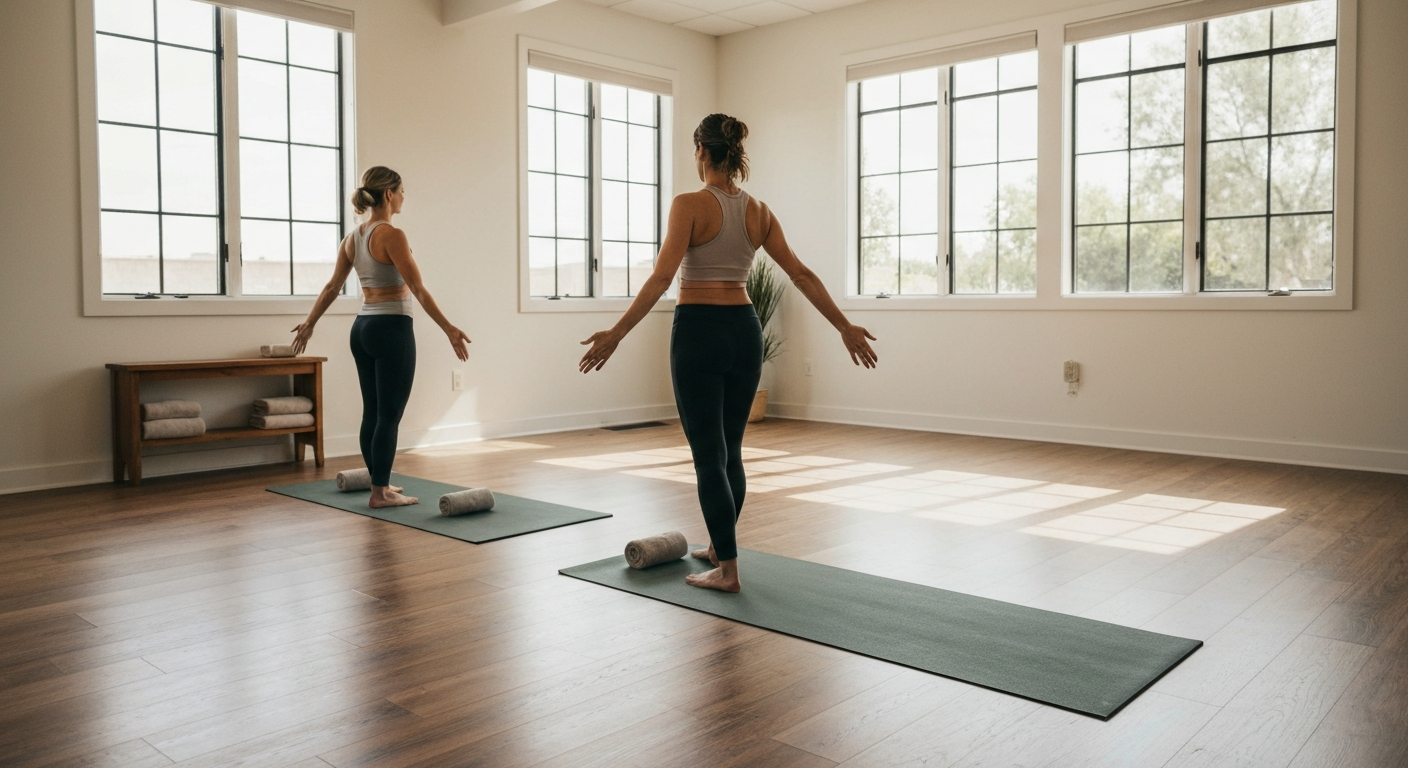
How to Start a Yoga or Pilates Studio in California
How to Start a Yoga or Pilates Studio in California
California has more yoga studios per capita than almost anywhere on earth. That’s both an opportunity and a warning. The market is real, but so is the competition — and the cost structure here is genuinely different from what you’ll read in generic “how to start a studio” guides. Two issues in particular will reshape your business plan if you’re not already aware of them: California’s Health Studio law and AB5.
Start with those two. Then build your numbers around them.
Business Formation
File your LLC through the California Secretary of State at bizfileOnline.sos.ca.gov. The filing fee is $70 (Form LLC-1). Within 90 days, file a Statement of Information for another $20.
Then comes the California reality check: the $800/year franchise tax to the Franchise Tax Board. This isn’t a first-year exemption situation — you owe it starting with your first taxable year. Budget for it immediately.
Get your EIN free at irs.gov/ein. You’ll need it before you hire anyone or open a business bank account.
California Health Studio Law
If you’re planning a membership-based studio — monthly autopay, annual contracts, anything that looks like a recurring membership — you need to know about the California Health Studio Services Contract Law, administered by the Department of Consumer Affairs (DCA).
This law applies to businesses that offer “health studio services” under contract. Yoga and Pilates studios selling memberships fall squarely within its scope. The law regulates what your contracts must include, how cancellations work, what refund rights your clients have, and what financial security you need to carry.
Here’s what it actually requires:
Registration. If you’re covered, you must register with the DCA annually. Registration costs roughly $100/year. It’s not optional, and operating without it exposes you to penalties.
Contract terms. Your membership agreements must include specific cancellation rights — clients can cancel within five business days of signing for a full refund. Contracts cannot lock someone in for more than three years. If you move or close, clients get refunds. These aren’t suggestions; they’re statutory requirements.
Financial security. Studios covered under the law must maintain a bond or other financial security to protect prepaid memberships. The amount varies based on your prepaid obligations.
The class-pack workaround. Not every studio triggers the Health Studio law. If you sell class packs instead of memberships — a customer pays for 10 classes upfront, uses them, done — you may avoid some of the contract and registration requirements. This is why you’ll notice some studios structure their offerings around class packs rather than monthly memberships. It’s not accidental.
That said, many studios want recurring revenue and a membership model is often more financially stable. If that’s your direction, talk to a California business attorney before drafting your membership agreement. The DCA’s requirements are specific enough that a generic template from another state will get you in trouble.
AB5 and Instructor Classification
This is the issue. If you’ve read about starting a yoga or pilates studio anywhere besides California, you’ve probably absorbed the assumption that instructors are independent contractors — 1099 workers who set their own schedules, work for multiple studios, handle their own taxes. That model is largely unavailable to you in California.
AB5, signed into law in 2019, codified the ABC test for worker classification. To treat someone as an independent contractor, you must satisfy all three prongs:
- A: The worker is free from your control and direction in performing the work.
- B: The work is outside the usual course of your business.
- C: The worker is customarily engaged in an independently established trade or occupation.
Yoga and pilates instructors fail Prong B. Teaching yoga is the usual course of business for a yoga studio. The same instructor teaching a mat class at your studio is doing exactly what your studio exists to do. Courts and the Labor Commissioner have consistently found that fitness instructors at studios fail this test.
What this means practically: your instructors are employees. Not in a gray area. Employees.
Payroll taxes. You’ll pay the employer share of Social Security and Medicare (7.65% on wages), plus California unemployment insurance, employment training tax, and state disability insurance contributions. Factor 10-15% on top of wages for these costs alone.
Workers’ compensation. California requires workers’ comp for all employees — no minimum headcount threshold. With yoga and pilates instructors, you’re looking at a physically active occupation, so premiums aren’t trivial. Budget $500-$1,500/year per instructor depending on payroll and your insurer’s rate.
Paid sick leave. California law requires paid sick leave. Under current law, employees accrue at least one hour per 30 hours worked, up to 40 hours per year. Even part-time instructors who teach two classes a week are covered.
Minimum wage. California’s minimum wage is $16.90/hour in 2026. Most experienced instructors earn more — $25-$50/hour is common at established studios — but you can’t pay below minimum wage regardless of class size or revenue.
What this does to your model. In states that allow contractor classification, a studio can pay instructors per class with no payroll tax liability, no workers’ comp obligation, and no sick leave accrual. Your labor costs are predictable and lower. In California, you’re running a payroll. That changes your break-even point, your pricing, and how many classes you need to fill to cover fixed costs.
Some studio owners try to work around AB5 by structuring instructors as “studio renters” who pay to use the space and collect fees directly from clients. This can work if genuinely structured that way — the instructor markets themselves independently, brings their own clients, and you’re truly just renting them space. But if you’re scheduling them, promoting their classes, handling registration, or paying them per class from your revenue, the renter model won’t hold up to scrutiny.
Get this right before you hire anyone. A misclassification finding from the California Labor Commissioner comes with back taxes, penalties, and interest. It’s a business-ending surprise for studios that didn’t plan for it.
Instructor Credentials
California does not require state licensing or certification to teach yoga or pilates. There’s no state exam, no DCA license, no regulatory body.
That doesn’t mean credentials are irrelevant. Your liability insurance will likely require instructors to hold recognized certifications. For yoga, the standard is Yoga Alliance registration (200-hour RYT minimum, 500-hour for more advanced programs). For pilates, the Pilates Method Alliance (PMA) certification is the industry benchmark, though several major apparatus brands — STOTT, Balanced Body — have their own certification programs that insurers accept.
As an employer, you’re not required to hire only certified instructors — but you’d be foolish not to. Set your own hiring standards and document them.
Startup Costs
Here’s where California diverges sharply from national averages. Rent alone can make or break a studio before you open.
LLC formation and franchise tax: $870 in year one $70 to file, $20 Statement of Information, $800 franchise tax. Recurring $820 annually after that.
Studio lease: $2,000–$8,000/month This range is wide because California is wide. A modest 1,000-square-foot studio in a mid-sized Central Valley city might run $2,000-$3,000/month. A 2,000-square-foot space in a coastal market — San Diego, the Bay Area, LA — easily hits $5,000-$8,000/month or more. Negotiate hard on tenant improvement allowances; landlords in softer markets will often contribute to build-out costs.
Build-out: $10,000–$50,000 A yoga studio with a clean floor, mirrors, basic lighting, and a bathroom refresh is on the lower end. A pilates studio requiring flooring reinforcement for heavy reformers, climate control upgrades, and custom storage is on the higher end. Get three contractor bids. California construction labor costs are not modest.
Equipment:
- Yoga: props (blocks, straps, bolsters), a sound system, maybe some mats for rentals. Budget $2,000-$8,000 total.
- Pilates reformers: $3,000-$8,000 each, new. A ten-reformer studio requires $30,000-$80,000 just in equipment before you hang a sign. Used reformers can cut costs, but inspect them carefully — worn carriage rails and deteriorated springs are safety issues.
- A full pilates apparatus studio (reformers, Cadillacs, chairs, barrels) could run $40,000+ in equipment alone.
Liability insurance: $500–$2,000/year Yoga and pilates have different risk profiles. Pilates instruction, particularly on apparatus, tends to command higher premiums. Shop through insurers who specialize in fitness businesses: Philadelphia Insurance, K&K Insurance, and Markel all have studio programs. Your policy should cover general liability, professional liability (for instructor errors), and products liability if you sell retail.
Music licensing: $300–$1,000/year If you play music during classes — and you will — you need licenses from ASCAP, BMI, and SESAC. These are separate licenses for separate performance rights organizations, and you technically need all three. Some studios use licensed fitness music services like Soundtrack Your Brand or Fit Radio, which bundle the licensing into a subscription. That’s simpler but runs $50-$150/month.
Software: $100–$300/month Mindbody, Vagaro, and Pike13 are the standard booking and class management platforms. Budget this from day one — you cannot run a class-based business on spreadsheets.
Total startup estimates:
- Yoga studio: $20,000–$60,000 before first class
- Pilates studio with reformers: $60,000–$150,000
These numbers assume you’re leasing, not buying. They don’t include working capital to cover payroll and rent during the first several months before revenue stabilizes. Most studios take 6-12 months to reach break-even. You need cash reserves for that runway.
California-Specific Operating Costs
A few ongoing costs that catch California studio owners off guard:
CalOSHA compliance. As an employer, you’re subject to California’s workplace safety regulations. For a yoga or pilates studio, this mostly means having a written injury prevention program and following heat illness prevention requirements if your studio runs heated classes. Not complicated, but required.
CCPA. If you collect personal data on clients — and your booking software absolutely does — California Consumer Privacy Act requirements apply once you hit certain thresholds. Most small studios won’t trigger CCPA initially, but if you grow, build a privacy policy and data management process early.
Payroll service. With employees comes payroll tax filings, W-2s, and quarterly reports. QuickBooks Payroll, Gusto, or a local payroll service will run $50-$200/month. Worth every dollar versus trying to manage it yourself.
Location Strategy
California real estate requires real strategy, not just “find a good neighborhood.”
Look for spaces with natural foot traffic from complementary businesses — coffee shops, health food stores, athletic apparel. Parking matters enormously in suburban and exurban markets. Transit access matters in dense urban ones.
Second-generation retail space — former gyms, dance studios, physical therapy offices — can dramatically cut your build-out costs because the flooring, bathroom configurations, and HVAC are often already appropriate. Ask your commercial real estate broker specifically to search for former fitness or wellness spaces.
Consider the competitive density in your target area. California has mature yoga markets in most urban neighborhoods. A neighborhood with four established studios is a harder launch than a suburb with one. Tools like Google Maps and Yelp give you a rough read; walking the area tells you more.
Next Steps
Register your LLC, then call the DCA before you finalize your membership pricing model — knowing whether the Health Studio law applies shapes your contracts and financial security requirements from the start.
Then build your financial model around employees, not contractors. Run the AB5 math before you commit to a lease. If the numbers work with employer payroll costs baked in, you have a real business. If they only work with 1099 instructors, you have a problem that California law won’t let you solve.
The studios that succeed here aren’t necessarily the ones with the best instructors. They’re the ones that understood the cost structure going in.