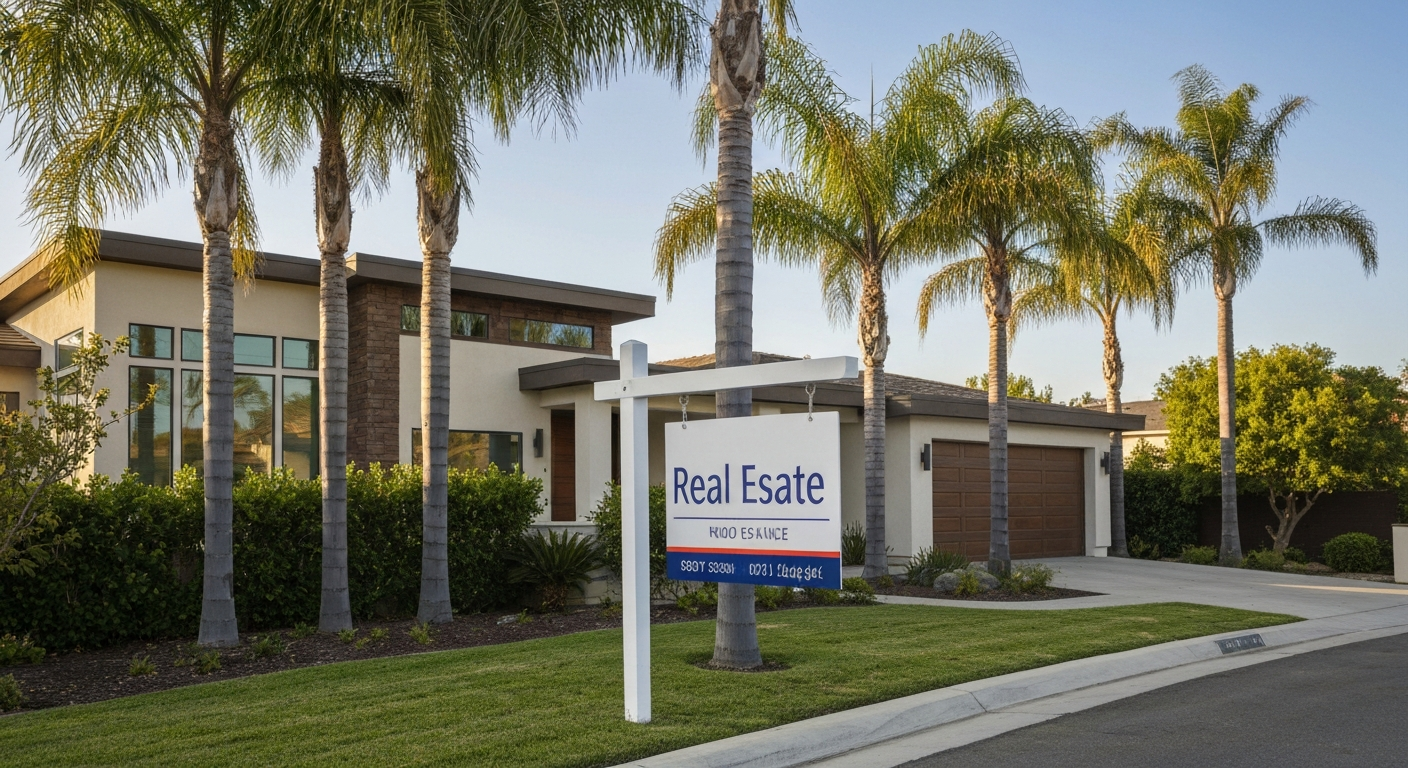
How to Start a Real Estate Business in California
How to Start a Real Estate Business in California
California requires 135 hours of pre-licensing education before you can sit for the real estate exam. That’s three full 45-hour courses — more than most states require. Add the July 2024 fee increases, mandatory fingerprinting, and the $800 annual franchise tax if you form an LLC, and the startup costs are real. So is the upside: California’s median home price consistently ranks among the highest in the country, which means commissions reflect that.
Here’s exactly what it takes to get licensed and get operating.
Salesperson License
The California Department of Real Estate (dre.ca.gov) oversees licensing for all real estate salespersons and brokers in the state. Everything runs through them — applications, exam scheduling, renewals.
Education Requirements
Before you can apply for the exam, you need 135 hours of approved pre-licensing education. That breaks down into three specific 45-hour courses:
- Real Estate Principles — The foundational course. Covers property ownership, land use controls, valuation, financing, and agency relationships.
- Real Estate Practice — The operational course. Covers how transactions actually work: listings, offers, escrow, and the day-to-day of being an agent.
- One elective — You choose from an approved list. Common choices include Real Estate Finance, Legal Aspects of Real Estate, Property Management, or Real Estate Appraisal.
The Real Estate Practice course carries a California-specific requirement that sets it apart from comparable courses in other states: it must include training on implicit bias and a fair housing role-play component. This isn’t optional content buried in an appendix — it’s a structured part of the course that reflects California’s ongoing regulatory emphasis on fair housing enforcement. Expect it to cover how unconscious bias affects client interactions, steering, and protected class issues under both federal and California fair housing law.
You can complete all three courses online. Most approved providers let you work at your own pace, so the actual calendar time depends entirely on how many hours you put in per week.
The Exam
Once you’ve completed your courses, you submit your exam application to the DRE along with proof of course completion. The exam is administered at DRE testing centers around the state.
Exam fee: $100.
That fee increased in July 2024. If you’ve seen older guides listing $60, those are outdated.
The salesperson exam has 150 multiple-choice questions. You need a 70% to pass. Topics are drawn directly from your three pre-licensing courses, with heavy emphasis on California-specific law, agency, contracts, and fair housing.
Fingerprinting and Background Check
You’ll need a Live Scan fingerprint submission processed through the Department of Justice and FBI. Fingerprint fee: $49. Schedule this through an approved Live Scan provider — most UPS stores and some libraries offer it.
License Fee
After you pass the exam, you apply for your actual license. License fee: $350.
That’s another July 2024 increase. The previous fee was $245.
Total government fees: approximately $539 — $100 (exam) + $350 (license) + $49 (fingerprints) + miscellaneous application fees. Budget a small buffer for anything that gets added depending on your specific situation.
Working Under a Broker
A salesperson license doesn’t let you operate independently. California law requires you to work under a licensed supervising broker. Your broker holds your license, supervises your transactions, and takes on legal responsibility for your work.
This isn’t a technicality. You cannot receive a commission directly from a client as a salesperson — it flows through your broker. When you’re interviewing brokerages, ask about commission splits, training, transaction support, and whether they cover errors and omissions (E&O) insurance for agents on their roster.
Broker License
If you want to run your own real estate firm — hire agents, keep the full commission, set your own policies — you need a broker license.
Requirements
The broker path has two gates:
Experience. You need a minimum of two years of full-time licensed salesperson experience within the five years preceding your application. The DRE wants to see you’ve actually worked transactions, not just held a license. Part-time experience counts, but the DRE calculates it differently — verify the specific requirements with dre.ca.gov if your history is non-standard.
Education. Beyond the salesperson’s three courses, broker candidates need additional college-level real estate courses. The DRE requires eight courses total, which means five more beyond the salesperson baseline. The additional required topics include Real Estate Finance, Real Estate Appraisal, Real Estate Economics or Accounting, Legal Aspects of Real Estate, and one additional elective from the approved list.
The broker exam is harder than the salesperson exam. It’s 200 questions, same passing threshold of 70%, and covers brokerage operations, office management, trust fund accounting, and supervision requirements — not just transaction mechanics.
What a Broker License Gets You
With a broker license, you can open your own office, operate under a business entity, hire salesperson licensees, and collect commissions directly. You can also work as a broker-associate under another broker if you don’t want to run an independent office — some experienced agents prefer the broker credential without the overhead of firm ownership.
The broker license is also required before you can legally manage a real estate office in California, even as an employee.
Costs
The licensing fees are the easy part to budget. The full picture — especially if you’re building an independent brokerage — is more involved.
Pre-Licensing Education: $200–$700
Online course providers vary significantly on price and quality. The range runs from budget options around $200 for all three courses to premium packages around $700 that include practice exams, exam prep materials, and instructor support. A few names you’ll see repeatedly in California: Colibri Real Estate, Allied Schools, and The CE Shop. Compare what’s included — some “cheap” packages don’t include the study materials that actually help you pass on the first try.
The exam has a meaningful fail rate. A second attempt costs another $100. Factor that into how much you invest in prep.
Government Fees: ~$539
Exam ($100) + license ($350) + fingerprints ($49) + application fees. These are fixed. No negotiating them down.
Business Entity: $70 + $800/Year
Most working agents operate as sole proprietors initially, which is fine. But if you want liability separation or plan to build a team, an LLC costs $70 to form with the California Secretary of State (Form LLC-1 at bizfileOnline.sos.ca.gov).
The harder pill: California’s $800 annual franchise tax. Every LLC and corporation in California pays this minimum, regardless of income. There’s no first-year exemption. It hits the moment your entity exists. If you form in October, you owe $800 that year plus another $800 in April. Budget for it.
E&O Insurance
Errors and omissions insurance is effectively mandatory. Most real estate boards require it for membership, many brokerages require it for agents they supervise, and operating without it in a state where transaction values routinely exceed $1 million is a significant risk. Annual premiums for a solo agent run $500–$1,500 depending on transaction volume and coverage limits. Brokerages pay more.
If your broker’s E&O policy covers you, confirm it in writing — and understand what it doesn’t cover.
Total Startup: Agent vs. Brokerage
Starting as a salesperson under a broker: $800–$1,500.
That covers courses ($200–$700), government fees (~$539), and a small buffer. You’re not paying for office space, support staff, or business infrastructure — your broker covers that. This is by far the lowest-friction path into California real estate.
Opening an independent brokerage: $30,000–$150,000.
That range isn’t a typo. Here’s where it comes from:
- Office rent in California is not cheap. A small office in a secondary market might run $1,500–$3,000/month. In the Bay Area or coastal Los Angeles, you’re looking at $4,000–$10,000+/month for anything presentable.
- Broker license education and exam fees add up.
- You’ll need transaction management software, a CRM, a website, and MLS membership fees.
- Workers’ comp insurance is mandatory in California for any W-2 employees — no minimum threshold, no exemptions. The moment you hire someone, you need a policy.
- Marketing to recruit agents and attract clients.
- The $800/year franchise tax if you operate as an LLC or corporation.
The $30,000 number assumes a lean operation: a small office or virtual brokerage setup, minimal staff, and careful vendor selection. The $150,000 number reflects a physical office with staff, real marketing budget, and proper reserves to survive the first year before commission revenue stabilizes.
A Few Things Worth Knowing Before You Start
California’s high property values cut both ways. A 2.5% commission on a $900,000 home is $22,500. That’s real money per transaction. But the cost of doing business here — office rent, insurance, franchise tax, marketing — is proportionally high. The math works, but you need volume or high-value transactions to make it work well.
AB5 matters if you’re a broker. California’s independent contractor law (AB5) has specific implications for how brokerages classify agents. Real estate agents have a statutory exemption from AB5 under Business and Professions Code 10032 — but it has conditions. If you’re opening a brokerage, talk to a California employment attorney before you structure your agent agreements.
License renewal is every four years. The DRE requires 45 hours of continuing education for renewal, including mandatory courses on ethics, agency, trust fund handling, fair housing, and risk management. Miss the renewal window and you’re looking at reinstatement fees and potential gaps in your ability to work.
Your first year will be slower than you expect. California’s licensing process takes time — between course completion, exam scheduling wait times, and DRE processing, budget three to six months from starting your courses to holding an active license. Plan your finances accordingly.
The DRE website (dre.ca.gov) has the current approved course provider list, exam scheduling, and all application forms. Start there. It’s more current than any third-party guide, including this one.