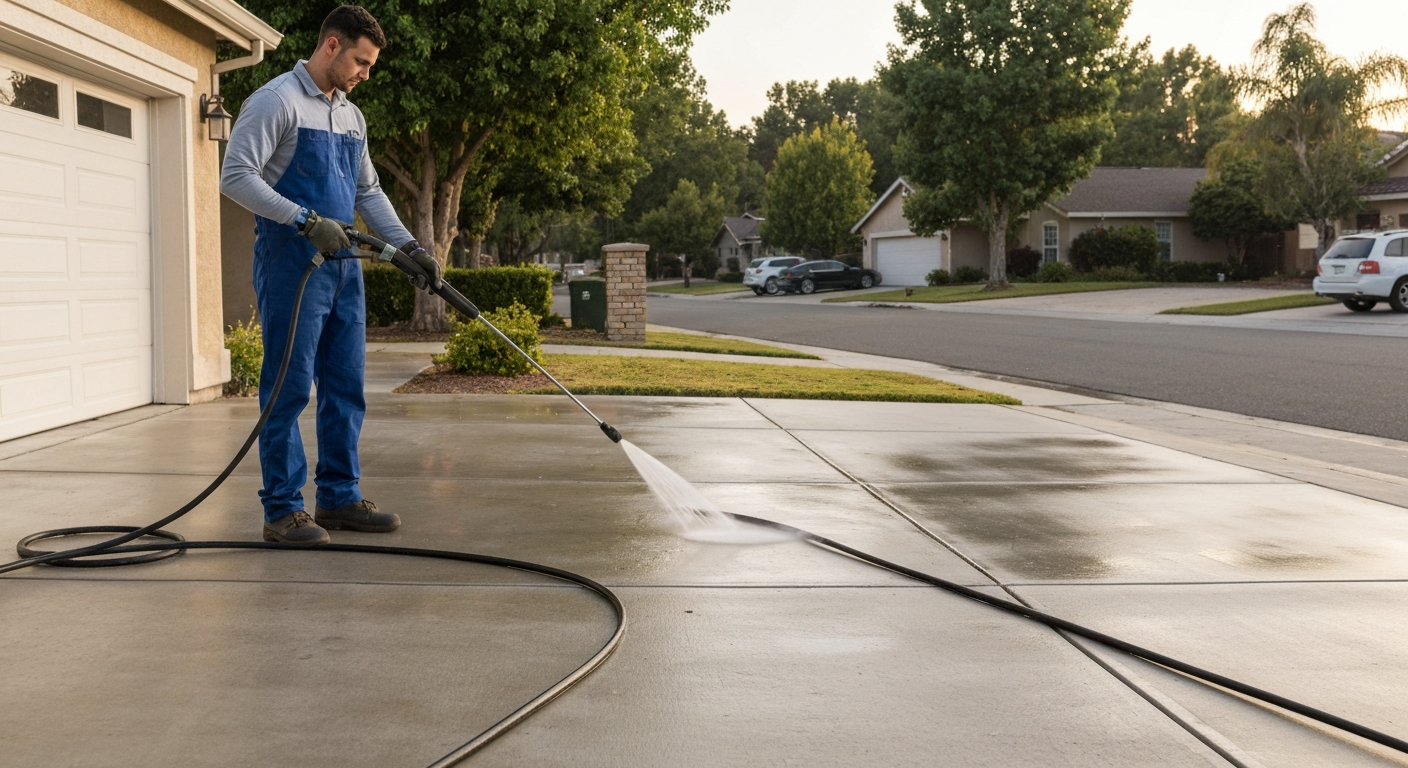
How to Start a Pressure Washing Business in California
How to Start a Pressure Washing Business in California
California is one of the few states that treats pressure washing as a licensed contracting trade. That single fact separates operators who build real businesses here from those who pick up a machine at Home Depot and wonder why commercial clients won’t call them back.
The good news: demand is relentless, startup costs are modest compared to most trades, and California’s climate means you can work year-round in most regions. The less good news: you need to understand two regulatory layers that catch most new operators off guard — the CSLB contractor’s license and California’s stormwater laws. Get both right and you have a real business. Ignore either and you’re exposed.
Here’s exactly what it takes.
Why Start a Pressure Washing Business in California?
The economics are straightforward. A quality commercial pressure washer, surface cleaner, hoses, and a truck or trailer setup runs $5,000–$15,000 to assemble. Compare that to most other contractor businesses and that’s a low barrier to entry — no apprenticeship program required to buy equipment, no specialized shop space needed.
Demand is consistent and diverse. Residential driveways and roofs are just the entry point. Commercial storefronts, parking garages, fleet vehicles, restaurant equipment pads, graffiti removal, and HOA common areas all need regular service. California has more commercial real estate per capita than almost anywhere in the country, and a lot of it needs cleaning.
The recurring revenue model is what separates pressure washing from one-off jobs. A single commercial contract — a restaurant chain needing monthly grease trap pad cleaning, a retail center on a quarterly schedule — generates predictable income without constant marketing. Many solo operators build a core of 8–12 commercial accounts that cover baseline expenses before they take a single residential call.
And unlike the Pacific Northwest, you’re not chasing weather. San Diego, Los Angeles, the Central Valley, the Bay Area — year-round operation is realistic everywhere except the mountain communities. That’s a genuine competitive advantage over similar businesses in most of the country.
Step 1: Do You Need a CSLB License?
Short answer: almost certainly yes.
California law requires a C-61/D-38 (Sand and Water Blasting) Limited Specialty Contractor license from the Contractors State License Board (CSLB) for any job where the combined cost of labor and materials exceeds $500. That threshold is not per hour or per day — it’s per job. And it covers labor AND materials combined, not just the invoice total.
Run the math on a typical commercial driveway cleaning. Two hours at $150/hour plus chemicals and disposal costs? You’re over $500 before you start. Most commercial work — parking lots, building exteriors, restaurant pads — clears the threshold easily.
Below $500 per job, you can technically operate as a handyman without the CSLB license. But that cap severely limits your market. Residential one-offs, maybe. Anything commercial, anything recurring, anything that requires a proper contractor to be on the vendor list? You need the license.
The penalty for getting this wrong is criminal, not just financial. Operating without a license on jobs over $500 is a misdemeanor in California. First offense: fines up to $5,000 and/or up to 6 months in jail. The CSLB runs sting operations. Competitors report unlicensed operators. This isn’t a gray area to manage — it’s a hard line.
Step 2: Getting Your C-61/D-38 License
The process takes time. Plan for 2–4 months from application to approval, so start this before you buy equipment.
Eligibility requirements:
You must be at least 18 years old and have four years of journey-level experience in sand and water blasting within the past 10 years. Journey-level means you were doing the trade work — not watching, not managing from an office. The CSLB will ask for verification from employers or clients. If you have relevant qualifications, the CSLB may grant a waiver of the experience requirement, but waivers aren’t automatic.
Fees:
- Application fee: $330 (non-refundable — this is the cost of applying, not of getting the license)
- Initial license fee: $200 (covers your first two years)
- Renewal: $450 every two years for an active license
Total out of pocket just for the license: $530 to get started, $450 every two years to keep it.
The exams:
You’ll sit for two separate tests: a trade exam specific to the D-38 classification and a law and business exam covering California contractor regulations, lien law, and business practices. Both are administered at CSLB-approved testing centers. Study materials are available through the CSLB and third-party prep courses. The law exam trips up a lot of applicants who don’t prepare — don’t skip it.
The contractor’s bond:
This is separate from your license fees. California requires a $25,000 surety bond for all licensed contractors. You don’t pay $25,000 — you pay an annual premium for a bonding company to back you. For applicants with decent credit, that premium runs $250–$500 per year. Poor credit pushes it higher.
Apply at cslb.ca.gov. The online portal walks you through the application, experience verification, and exam scheduling.
Step 3: Wastewater and Environmental Compliance
This is where operators get into serious trouble — often without realizing it.
California law prohibits discharging pressure wash wastewater into storm drains, gutters, ditches, creeks, or any natural waterway. Not just wastewater with chemicals in it. Any pressure wash runoff, including plain water. The reasoning is that even “clean” runoff carries oil, grease, heavy metals, sediment, and other pollutants picked up from the surface being cleaned. California’s Regional Water Quality Control Boards enforce this under the Clean Water Act and state stormwater regulations, and they take it seriously.
What this means in practice:
You cannot blast a driveway and let the water sheet into the gutter. You cannot clean a parking lot and let runoff flow to the nearest drain. Every drop of wastewater needs to be captured, contained, and disposed of properly.
Collection methods include berms and inflatable dams to contain water on-site, vacuum recovery systems that suck up wastewater as you work, or routing water to a sanitary sewer connection — but the last option requires explicit approval from the local utility. You can’t just redirect water into an indoor drain without permission.
Some municipalities require a wastewater discharge permit from the local Regional Water Quality Control Board before you can operate. Check with your city’s environmental compliance or public works department before you take on commercial work.
The penalties are real. Illegal discharge violations run up to $2,500 per day per violation. California’s enforcement isn’t theoretical — local stormwater inspectors actively patrol commercial areas, and complaints from neighbors or clients can trigger inspections.
The smart play: invest in a water reclamation and vacuum recovery system. These run $2,000–$8,000 depending on capacity and configuration. That’s not just a compliance cost — it’s a competitive advantage. Many commercial property managers now require proof of wastewater containment before they’ll hire a pressure washing contractor. Operators who can demonstrate proper reclamation systems win bids that unlicensed or under-equipped competitors can’t touch.
If you use chemicals — degreasers, sodium hypochlorite for roof washing, caustic cleaners for grease removal — additional rules apply. Some chemicals trigger hazardous materials handling requirements under CalEPA and local fire codes. Check with your county environmental health department before adding chemical services.
Step 4: Business Formation and Local Licenses
Once you’ve sorted the CSLB and environmental compliance, the business formation side is straightforward.
Form your LLC through the California Secretary of State at bizfileOnline.sos.ca.gov. Filing fee: $70. An LLC separates your personal assets from business liability — important in any contractor business, essential in one with wastewater exposure.
The $800 franchise tax is non-negotiable. Every California LLC pays $800 per year to the Franchise Tax Board, regardless of revenue. The first-year exemption that existed under AB 85 expired December 31, 2023. Budget for it from day one.
Statement of Information (Form LLC-12): $20, due within 90 days of formation and biennially after that.
City business license: Most California cities require a local business license or tax certificate. Fees range from $15 to $300+ depending on the city and your projected revenue. This is separate from your CSLB license and your LLC.
CDTFA Seller’s Permit: Pressure washing services are generally not subject to California sales tax, so you typically won’t need a seller’s permit for the work itself. But if you sell cleaning products to clients — retail sales of chemicals, for example — that’s taxable and requires registration at cdtfa.ca.gov.
For a complete list of permits specific to your business type and location, run your information through CalGold. It pulls requirements from state and local agencies based on what you’re doing and where.
Step 5: Insurance
The license gets you legal. Insurance keeps you solvent when something goes wrong.
General liability insurance is the baseline. For pressure washing, $1 million per occurrence is the standard minimum — and most commercial clients, HOAs, and property managers will require a certificate of insurance before they let you on site. Budget $800–$2,000 per year depending on your revenue and coverage limits.
Workers’ compensation is mandatory the moment you hire a single employee in California. No minimum employee threshold. One employee, part-time, occasional — doesn’t matter. Non-compliance penalties start at $10,000. If you’re solo, you don’t need it for yourself, but the second you bring someone on, get it.
Commercial auto coverage is required if you’re using a truck or trailer for business purposes. Your personal auto policy won’t cover a work-related accident. This is a separate policy or an endorsement on a commercial policy.
Inland marine/equipment coverage protects your pressure washer, surface cleaners, hoses, and gear while in transit and on job sites. Standard general liability doesn’t cover your own equipment. A commercial pressure washer is a $2,000–$8,000 asset sitting in an unlocked trailer — worth insuring.
Pollution liability deserves attention. Standard general liability policies frequently include pollution exclusions, and wastewater discharge can be classified as a pollution event. If you accidentally contaminate a storm drain or a client’s property with runoff, your GL policy may deny the claim. A pollution liability endorsement or separate policy closes that gap. Given California’s enforcement environment, this coverage is worth the premium.
Startup Costs at a Glance
No surprises at the end. Here’s what first-year costs look like for a solo licensed operator:
| Item | Cost |
|---|---|
| LLC filing (SOS) | $70 |
| Franchise tax (FTB) | $800/year |
| Statement of Information | $20 |
| CSLB application + initial license | $530 |
| Contractor’s surety bond | $250–$500/year |
| Pressure washer + equipment | $5,000–$15,000 |
| Water reclamation system | $2,000–$8,000 |
| General liability insurance | $800–$2,000/year |
| Local business license | $15–$300 |
| Total first-year estimate | $10,000–$28,000 |
The wide range reflects real choices: a used trailer setup with a mid-range pressure washer versus a new truck-mounted commercial rig. Both can build a profitable business. The water reclamation system is the one item some operators skip to save money early — don’t. It’s not optional in California.
The Actual Path Forward
Start the CSLB application before anything else. The 2–4 month processing time is the longest lead item, and you can’t legally take jobs over $500 without it. While the application is in process, get your experience documentation together, schedule your exams, and secure your surety bond.
Assemble your equipment and reclamation system before you start marketing commercial accounts. Property managers will ask about your wastewater handling. Have a real answer.
Form the LLC, get the insurance, pull the city business license — that’s a few days of paperwork once the CSLB piece is moving.
The operators who struggle in California are the ones who treat the license and the environmental rules as optional until they get caught. The operators who build durable businesses here use those same requirements as a moat: they’re licensed, bonded, insured, and compliant, and their competitors — the ones who show up with a consumer pressure washer and no credentials — can’t compete for the contracts that actually pay well.