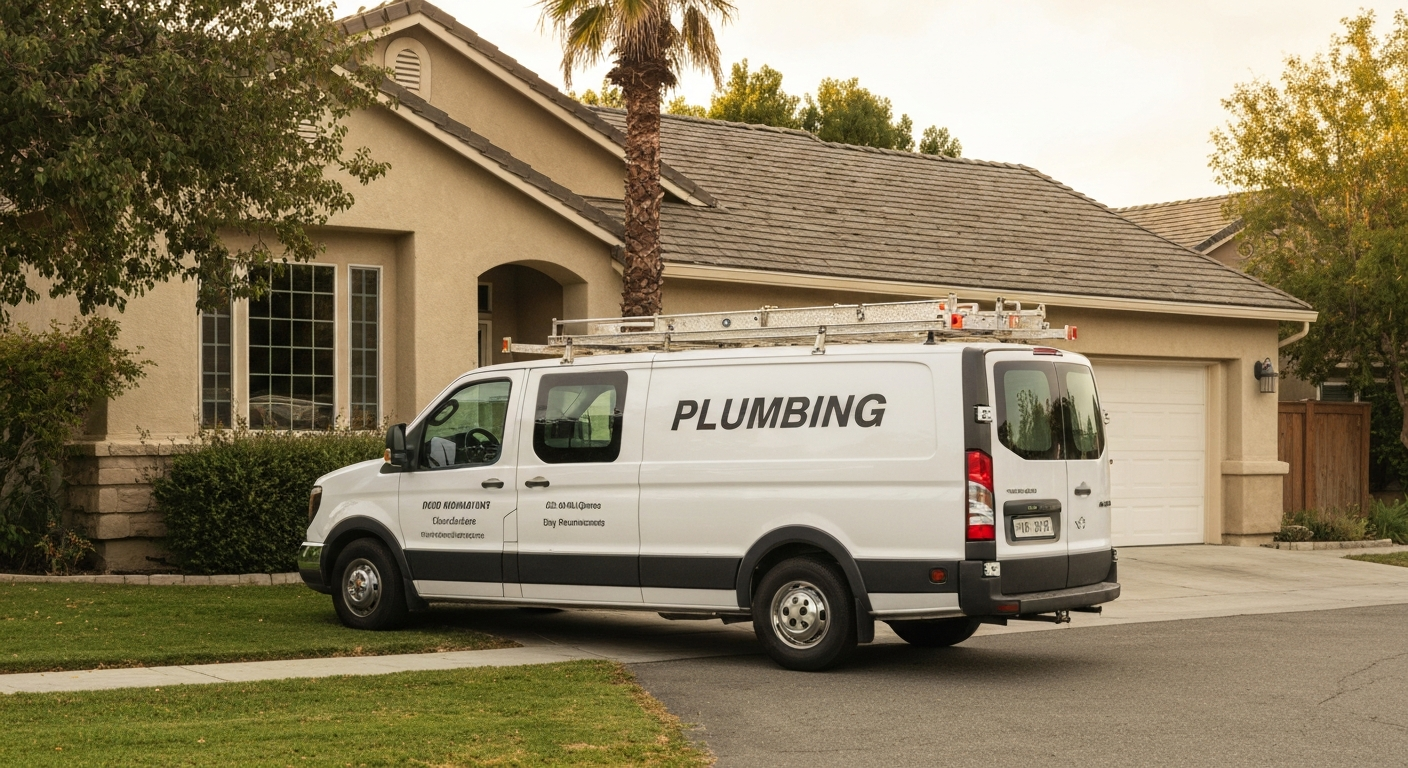
How to Start a Plumbing Business in California
How to Start a Plumbing Business in California
California doesn’t have a journeyman license or a master plumber license at the state level. There’s one license that matters: the C-36 Plumbing Contractor license from the Contractors State License Board (CSLB). Get it, and you can run a plumbing business anywhere in the state. Don’t have it, and you can’t legally take a job over $1,000.
That’s actually simpler than most states. But “simpler” doesn’t mean cheap or fast. Between the experience requirements, two exams, mandatory workers’ comp, and California’s infamous $800/year franchise tax, you’re looking at real money and real lead time before you take your first job as the owner.
Here’s what it actually takes.
C-36 Plumbing Contractor License
The C-36 is a Class C Specialty Contractor license issued by the CSLB. It authorizes you to contract for plumbing work — which California defines broadly. The C-36 covers water supply systems, drainage, gas piping, sewage systems, and related fixtures. Residential, commercial, industrial. If liquid or gas moves through a pipe in a structure, the C-36 covers it.
When you need it: Any plumbing project where the total cost — labor plus materials combined — exceeds $1,000. That threshold went up from $500 to $1,000 on January 1, 2025, thanks to AB 2622. Below $1,000, unlicensed work is legal. Above it, you need the C-36 or you’re violating state law. The fines and potential criminal liability aren’t worth testing.
The Experience Requirement
CSLB requires four years of journey-level plumbing experience, totaling 8,000 hours, within the last ten years. Journey-level means you were doing the actual work — not supervising from the office, not running a supply store. Hands-on field experience installing, repairing, and maintaining plumbing systems.
That experience can come from W-2 employment under a licensed contractor, a sole proprietorship (if you were already doing small jobs under the $1,000 threshold), or a registered apprenticeship program. What matters is that you can document it. CSLB will ask for verification, and the most common way to confirm employment is through a licensed contractor who signs off on your work history. If your former employer is no longer in business or won’t cooperate, you’ll need to provide alternative documentation — tax records, pay stubs, union records.
The college degree shortcut: This one matters if you went to school for plumbing. An associate’s degree or certificate from a plumbing program of at least two years substitutes for up to three of the four required years of experience. That means a graduate of a two-year plumbing technology program only needs one additional year of documented journey-level experience before qualifying for the C-36. For anyone who went the formal education route, that’s a substantial head start — potentially cutting your qualifying period by 75%.
Exams and Application
Once you’ve documented your experience and submitted your application, you’ll need to pass two separate exams. Both are administered by PSI Services on behalf of CSLB.
The two exams:
- C-36 Plumbing Trade Exam — covers the technical side: California plumbing code, pipe sizing, materials, drainage systems, gas systems, fixture installation, backflow prevention.
- Law and Business Exam — covers contractor licensing law, contract requirements, lien law, workers’ comp requirements, OSHA basics, and business practices.
Both require a 72% passing score. They’re not trivial, especially the Law and Business exam if you’ve spent your career in the field and not in a contractor’s office. Budget time to study. PSI offers a candidate information bulletin, and there are third-party prep courses worth the investment if you want to pass the first time.
Fees:
The CSLB application fee is $450. After you pass your exams, you pay the initial license fee of $200. Total to get licensed: $650 in state fees. Once you pass your exams, you have 90 days to submit your surety bond documentation and proof of workers’ compensation insurance. Miss that window and the process restarts.
Renewal:
Your C-36 license renews every two years. The renewal fee depends on your business structure. Sole owners pay $450. Non-sole owners — corporations, LLCs, partnerships — pay $700. That difference adds up over the life of your business, though it shouldn’t drive your entity choice on its own.
Bond, Insurance, and Workers’ Comp
This is where California gets expensive. The license itself is $650. The ongoing cost of operating legally can run five figures a year before you’ve bought a single fitting.
Surety Bond
Every CSLB-licensed contractor must maintain a $25,000 contractor’s surety bond. The bond protects consumers — if you abandon a job or fail to pay subcontractors, a claim can be filed against it. You don’t pay $25,000 upfront. You pay a premium to a surety company, which issues the bond on your behalf. For a new contractor with decent credit, the annual premium runs $100-$500. Bad credit pushes it higher. Shop multiple surety companies — rates vary.
Workers’ Compensation Insurance
As of January 1, 2025, workers’ comp is mandatory for all CSLB-licensed contractors. No exemptions. Previously, sole owners with no employees could opt out. That exemption is gone. If you’re a solo plumber operating as a sole owner, you still need workers’ comp coverage for yourself.
This is California’s most significant insurance requirement for new contractors. Workers’ comp premiums for plumbing work are calculated as a percentage of your payroll (including your own wages if you’re a working owner). Plumbing carries a higher risk classification than, say, landscaping. A solo operator might pay $2,000-$6,000/year just for self-coverage. Add employees and that number climbs fast — expect $5,000-$15,000+ annually once you have a crew, depending on payroll size and claims history.
Get quotes from multiple carriers. The State Compensation Insurance Fund (State Fund) at scif.com is the insurer of last resort in California and will write policies when private carriers won’t. New businesses often start with State Fund and move to private carriers after establishing a clean loss history.
General Liability Insurance
CSLB doesn’t legally require general liability, but every customer with a brain will ask for a certificate before you start work. A broken water line in a $800,000 kitchen will end your business without it. Standard recommendation for plumbing contractors: $1 million per occurrence minimum, $2 million aggregate. Annual premiums run $3,000-$12,000 depending on revenue, scope of work, and claims history. New businesses often pay on the higher end.
Commercial Auto Insurance
Your personal auto policy won’t cover a service van being used for business. You need commercial auto insurance for any vehicle used in your plumbing business. Budget $1,500-$3,000/year per vehicle for a plumbing service van.
Startup Costs at a Glance
Let’s put numbers to everything. This is what it actually costs to launch a solo plumbing operation in California — before you book your first job.
Business formation:
- LLC filing with the California Secretary of State: $70 (Form LLC-1, filed at bizfileOnline.sos.ca.gov)
- Statement of Information (Form LLC-12): $20, due within 90 days
- California franchise tax: $800/year, every year, starting with your first year — there’s no first-year exemption anymore. The AB 85 exemption expired December 31, 2023.
Licensing:
- CSLB application fee: $450
- Initial license fee: $200
- Fingerprinting/background check: $49-$59
- Total CSLB costs: approximately $700-$710
Ongoing insurance and bonding (annual):
- Surety bond premium: $100-$500
- Workers’ comp (mandatory, solo operator): $2,000-$6,000+
- General liability: $3,000-$12,000
- Commercial auto: $1,500-$3,000 per vehicle
Equipment:
- Service vehicle: $20,000-$50,000 (new or reliable used)
- Plumbing tools and hand tools: $5,000-$25,000 depending on scope of work
- Drain camera and pipe locator: $3,000-$10,000 (basic camera to professional-grade combo system)
The math:
A realistic solo startup — LLC formed, C-36 licensed, insured, bonded, basic tools, one used service van — runs $15,000-$40,000 before the vehicle. Add a work van and you’re looking at $35,000-$90,000 to do this right. The vehicle is often the single biggest line item, and financing it is common.
That $800/year franchise tax is worth calling out again because it surprises people. It’s not a one-time fee. It’s not waived for new businesses anymore. It’s $800/year to the Franchise Tax Board, due by the 15th day of the 4th month after formation. If your LLC grosses over $250,000, you also owe an additional LLC fee on top of the $800 — $900 for $250K-$500K in gross revenue, and it scales up from there.
Structuring Your Business
Most solo plumbers start as an LLC or a sole proprietorship. Sole proprietorship is technically simpler — no formation paperwork, no $800 franchise tax — but it leaves your personal assets exposed to business liability. Given that plumbing work involves gas lines, water damage potential, and jobs inside people’s homes, that exposure is real.
An LLC gives you liability protection and only costs $70 to form plus the $800/year franchise tax. For most plumbers, that’s a reasonable trade.
If you’re hiring employees from the start, an S-corporation structure can offer tax advantages at higher income levels — but run that decision by a California CPA first. The tax math changes depending on your net income.
Regardless of structure, you’ll need:
- An EIN from the IRS (irs.gov/ein) — free, takes 5 minutes online
- A business bank account separate from personal accounts
- A City business license from whatever city you operate in (California doesn’t have a state business license — cities handle this locally, fees vary)
The Timeline to Launch
Be realistic about how long this takes.
If you have your four years of experience documented and ready to go, the CSLB application review typically takes 4-8 weeks. After approval, you schedule your exams through PSI. Study time depends on your background — figure 4-12 weeks if you’re serious about passing the first time. After passing, you have 90 days to get your bond and workers’ comp in place.
From application submission to licensed and operational: plan for 4-6 months minimum. Some people move faster. Some hit delays with experience verification or exam scheduling. Don’t quit your current job the day you submit the application.
One More California-Specific Cost to Know
California’s minimum wage is $16.90/hour effective January 1, 2026. If you hire anyone — an apprentice, a helper, an admin — that’s your floor. California’s AB5 law also makes it very difficult to classify workers as independent contractors. The ABC test used under AB5 is strict. In plumbing, most helpers and installers will qualify as employees, not subcontractors, which means payroll taxes, workers’ comp on their wages, and paid sick leave.
Don’t try to sidestep this with 1099s. The Contractor State License Board and the Employment Development Department both look at worker misclassification in the trades. The penalties are significant.
Getting Started
The path is clear enough: document your experience, file the CSLB application at cslb.ca.gov, pass two exams, get bonded, get insured, form your LLC, and get your city business license.
California’s C-36 is genuinely a cleaner system than states that require separate journeyman licenses, master licenses, and multiple renewals at different levels. One license, one renewal cycle, statewide authority. The costs are real — the franchise tax, the mandatory workers’ comp, the liability insurance — but they’re predictable. Build them into your pricing from day one, not as an afterthought.
If you have your experience and you’re serious about owning your work, there’s no reason to wait.