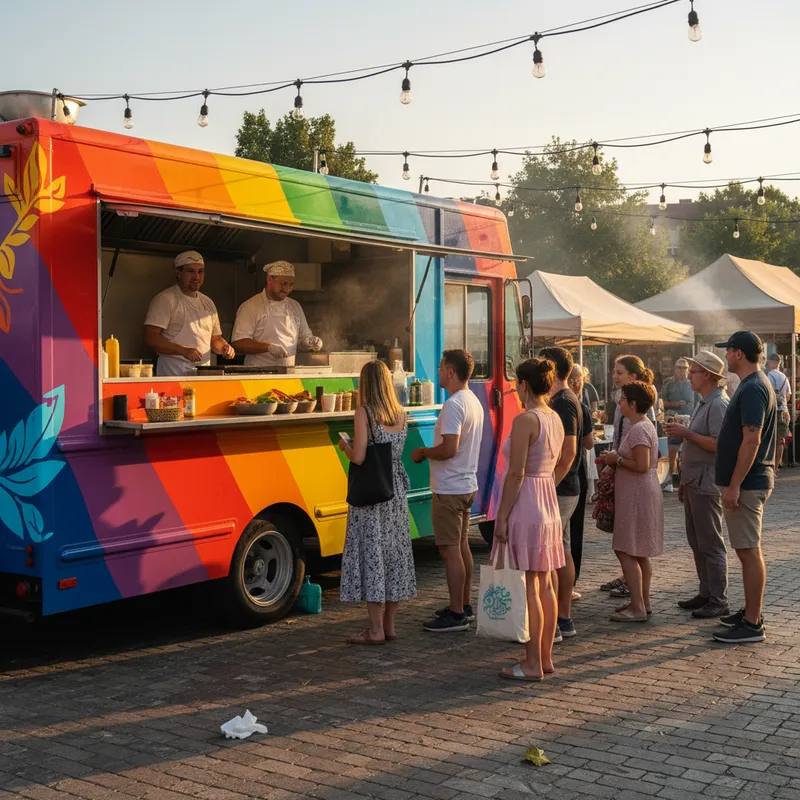
How to Start a Food Truck Business in California
How to Start a Food Truck Business in California
California’s food truck permit stack is genuinely complex. Before you serve your first customer, you’ll need a Mobile Food Facility permit from your county health department, a commissary agreement, a CDTFA Seller’s Permit, city business licenses for every jurisdiction you park in, and possibly a fire department permit on top of all that. The health permit alone requires a full plan check — scaled blueprints, equipment specs, plumbing diagrams — before you fire up the grill.
Budget $10,000–$30,000 in licensing and compliance costs before you even think about buying the truck. This guide walks through every piece of that permit stack so none of it surprises you.
Why Start a Food Truck in California?
Despite the paperwork, the case for California is strong. LA County alone has thousands of permitted mobile food facilities — one of the densest food truck markets in the country. The state’s food culture is genuinely diverse: tacos, Korean BBQ, acai bowls, vegan fusion, craft coffee, Filipino-American comfort food. There’s real demand for almost any concept if you find the right locations.
The economics compare favorably to a brick-and-mortar restaurant. A fully equipped used truck runs $50,000–$100,000. A custom new build is $100,000–$200,000+. A restaurant buildout in California? $250,000 on the low end, often $500,000–$1,000,000+ in major cities by the time you’re done with construction, equipment, and deposits. The truck lets you test the concept before you commit to a lease.
Mobility is the other real advantage. You can follow events, farmers markets, and office parks during the week, then pivot to late-night spots on weekends. If a location isn’t working, you move. A restaurant can’t do that.
Well-located food trucks in California generate $250,000–$500,000 in annual revenue. That’s not guaranteed — plenty of trucks fail — but the ceiling is real, and the overhead structure is fundamentally different from a restaurant.
Step 1: Business Structure and State Registrations
Before anything else, get your legal and tax registrations in order.
Form your LLC. File Articles of Organization (Form LLC-1) through bizfileOnline.sos.ca.gov. The filing fee is $70. California LLCs also pay an $800/year franchise tax to the Franchise Tax Board — this is due regardless of whether you made a dime. The AB 85 first-year exemption expired December 31, 2023, so you owe it from year one. File your Statement of Information (Form LLC-12) within 90 days of formation: $20.
Get your EIN. Free, at irs.gov. Takes about five minutes online. You need this to open a business bank account, hire employees, and file taxes.
Register for a CDTFA Seller’s Permit. This one is required and free. Register at cdtfa.ca.gov. Food trucks sell prepared food, which is taxable in California. The statewide base rate is 7.25%, but local add-ons push it higher in most cities — Los Angeles is 10.25%, San Francisco is 8.625%. You’re responsible for collecting and remitting the correct rate for wherever you make the sale.
One thing people skip: the Seller’s Permit is not optional just because you’re mobile. You sell taxable goods in California. You need it.
Step 2: Mobile Food Facility (MFF) Permit
This is the cornerstone permit. Without it, you don’t operate.
Your county environmental health department issues the MFF permit. The process starts before you cook anything — or in many cases, before you even finish building out the truck. You submit a plan check: scaled interior blueprints of your truck layout, a full equipment list, plumbing and wastewater diagrams, ventilation specs, and your proposed menu. The county reviews everything to ensure compliance with the California Retail Food Code (CalCode), specifically sections 114294 and beyond governing mobile food facilities.
Plan check fees vary by county: typically $200–$600+. The annual MFF permit itself runs $500–$1,200+ per year. LA County is on the higher end at roughly $900–$1,200 annually. Santa Clara County charges approximately $446 for the application.
What CalCode actually requires for your truck:
- A handwashing station with hot and cold running water, soap, and paper towels — separate from your food prep sink
- A three-compartment sink for washing, rinsing, and sanitizing equipment
- Adequate mechanical refrigeration (temperature-holding requirements are specific and enforced)
- Food-grade surfaces throughout — no raw wood, no porous materials
- A grease trap or interceptor if you’re cooking with oil
- Proper ventilation, usually including a hood system over cooking equipment
This is not a home kitchen with wheels. The equipment requirements are commercial-grade, and the layout has to demonstrate compliance on paper before a single health inspector sets foot in the truck. If your plan check comes back with corrections, you revise and resubmit — which adds time and sometimes additional fees.
After the plan check clears, you get a health inspection before permit issuance. Then routine inspections throughout the year, often unannounced.
The multi-county problem. If you operate across county lines — say you park in LA County during the week and venture into Orange County for an event on Saturday — you may need a separate MFF permit from Orange County’s environmental health department. Some counties have reciprocity agreements that honor neighboring counties’ permits. Many don’t. Check with each county before you operate there, or you risk fines and forced closure. This is one of the biggest operational headaches for trucks that want to follow events across the region.
Step 3: Commissary Agreement
This surprises almost everyone who’s new to the industry.
California law requires most food trucks to operate from a licensed commissary. A commissary is a permitted commercial kitchen facility — not your home, not a parking lot — where you prep food, clean and store equipment, restock supplies, and dispose of wastewater. You must have a signed commissary agreement on file with your county health department. No agreement, no MFF permit.
Commissary rental runs $400–$2,000+/month depending on your market and how many hours you need. In LA or San Francisco, expect to be on the higher end. Some food truck operators use shared commercial kitchens or cloud kitchens — these work as commissaries as long as the facility holds the appropriate permits. The commissary itself must be a licensed food facility with its own health permit.
Your truck typically needs to return to the commissary at least once every 24 hours for cleaning and restocking, though this varies by county. Some counties have stricter requirements.
The assumption that you can just park the truck in your driveway and call it good? That doesn’t work. Most jurisdictions won’t permit it, and operating without a commissary agreement puts your MFF permit at risk. Budget commissary costs into your financial model from day one: $4,800–$24,000/year is a real line item.
Step 4: Food Safety Certifications
Two separate requirements here, and they apply to different people on your team.
Food Handler Card. Every employee who handles food must have one within 30 days of hire. Cards cost roughly $7–$10 and are available through accredited online courses. As of January 1, 2024, you as the employer are required to pay for the training and testing costs, and provide two hours of paid time for employees to complete it. This is a California labor law requirement, not optional.
Food Safety Manager Certification. At least one certified food safety manager must be associated with each food truck. This is a different, higher-level requirement — it involves passing an approved proctored exam (ServSafe is the most widely used, but other ANSI-accredited exams qualify). The certification is valid for five years. Budget $100–$200 for study materials and the exam fee.
The manager cert is the one that catches small operators short-staffed. If your only certified manager calls in sick and you’re the one running the truck that day, make sure you’re also certified. Inspectors check.
Step 5: City Permits and Fire Department
Your county MFF permit covers the health side. It does not cover the city side.
City business license. You need a business license (sometimes called a tax certificate) in every city where you operate. Park in five cities? Potentially five business licenses. Fees vary: $50–$200+ per city, depending on the municipality. Some cities have annual fees; others charge based on gross receipts. If you’re building a route that crosses multiple cities — which most trucks do — this adds up and adds administrative overhead.
Beyond the license, many California cities have food truck-specific ordinances you need to know before you park:
- Designated vending zones or permit-required areas
- Time limits on how long you can stay in one spot
- Minimum distance requirements from brick-and-mortar restaurants (some cities require 50–300 feet)
- Noise restrictions affecting generators
Check the municipal code for every city on your route. Call the city clerk’s office if it’s not clear online. Finding out you’re in violation after the fact is significantly worse than five minutes of research upfront.
Fire department permit. Many California jurisdictions require a separate fire department permit for food trucks operating with cooking equipment. This covers your fire suppression system, propane tank inspection (if applicable), and ventilation. The fire department and health department operate independently — you need clearance from both, and the inspections happen separately.
The fire suppression system — typically an Ansul system or equivalent — is required for any truck running open-flame or high-temperature cooking equipment like a griddle, fryer, or range. Installed cost: $3,000–$6,000. On top of that, the system requires annual inspection and certification to maintain your fire permit. This is an easy cost to miss when you’re building out your budget. Don’t miss it.
Step 6: Insurance
The state doesn’t set a universal insurance requirement for food trucks beyond workers’ comp, but the practical reality is that you won’t get into most events, parks, or private lots without proof of coverage.
Commercial auto insurance. Your personal auto policy doesn’t cover a commercial vehicle. You need commercial auto coverage for the truck: $2,000–$5,000/year depending on the truck value, your driving record, and the insurer.
General liability. A $1 million per-occurrence GL policy is the standard that most events, property owners, and cities require. It also covers product liability — which matters enormously in the food business, where a foodborne illness claim is a real exposure. Budget $800–$2,000/year. Most food business GL policies include product liability in the base coverage, but confirm this with your broker.
Workers’ compensation. If you hire even one employee in California, workers’ comp is mandatory. No minimum threshold, no exemptions. Penalties for non-compliance start at $10,000. Get the policy before the first employee’s first day.
Business interruption coverage. Recommended, not required. Food trucks break down. Generators fail. Trucks get rear-ended in a parking lot. Business interruption insurance covers lost income while your truck is out of service. Given that your entire revenue stream depends on one vehicle, this is worth the premium.
Startup Costs at a Glance
Here’s what the full picture looks like financially, so you can build a real budget:
| Item | Cost |
|---|---|
| Food truck (used, equipped) | $50,000–$100,000 |
| Food truck (new, custom) | $100,000–$200,000+ |
| LLC filing (SOS) | $70 |
| Franchise tax (annual) | $800/year |
| MFF permit + plan check | $700–$1,800 (first year) |
| Commissary rental | $4,800–$24,000/year |
| Food Safety Manager certification | $100–$200 |
| Fire suppression system (installed) | $3,000–$6,000 |
| City business licenses (multiple cities) | $50–$1,000 total |
| Commercial auto + general liability insurance | $3,000–$7,000/year |
| Initial food and supply inventory | $2,000–$5,000 |
| Total first-year estimate (including truck) | $65,000–$200,000+ |
A few notes on that range: The low end assumes a used truck that already has a compliant build-out, a relatively affordable commissary, and you operating in one or two cities. The high end is a custom new truck, a commissary in a major metro, and a multi-city operation that requires several business licenses and a robust insurance package.
What that table doesn’t fully capture: your time. The plan check process can take four to eight weeks. Getting commissary agreements and fire department clearance adds more. Budget at least two to four months between “I want to do this” and your first legal day of operation.
The Permit Order That Actually Works
People often try to lock in a commissary and get insurance before they know what county will permit them. Here’s a practical sequence:
- Choose your primary county of operation first. Contact that county’s environmental health department and ask for their MFF pre-application materials. This tells you exactly what they’ll require for plan check.
- Design your truck build-out (or evaluate any used truck) against those specific requirements before you buy or commit.
- Secure your commissary agreement — you’ll need this for the MFF application.
- Form your LLC and get your EIN so you can sign contracts and open accounts.
- Submit your plan check to the county health department.
- Apply for fire department permits while the health plan check is in process.
- Get your insurance — you’ll need the policy documentation for health and fire inspections.
- Pass your health inspection and receive your MFF permit.
- Register for your CDTFA Seller’s Permit (can be done earlier, but must be active before first sale).
- Pull city business licenses for each city on your route.
Start with the county health department. Everything else follows from what they require.
One More Thing
California’s food truck regulations are enforced at the county level, which means the details genuinely vary. LA County’s process is different from San Diego County’s, which is different from Sacramento County’s. The framework above applies statewide, but the specific fees, forms, and timelines come from your county’s environmental health department.
Use calgold.ca.gov — the state’s permit lookup tool — to generate a list of permits required for your specific business type and location. It’s not exhaustive, but it’s a solid starting point and often surfaces requirements people miss.
The permit process is real work. But it’s finite. Every truck that’s legally operating in California got through exactly this stack. Know what’s coming, build it into your timeline and budget, and you’re not behind — you’re just at the beginning.