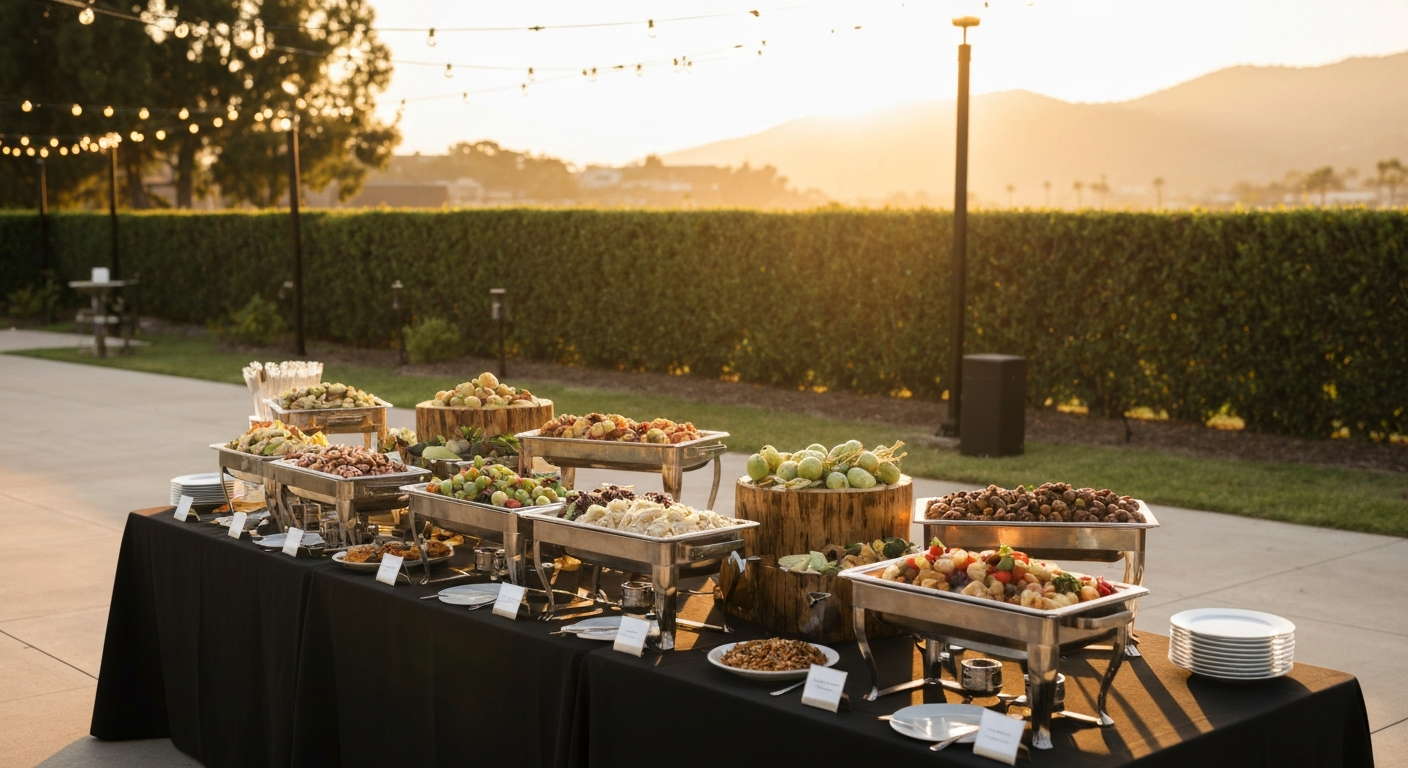
How to Start a Catering Business in California
How to Start a Catering Business in California
California’s event industry generates billions of dollars a year. Weddings in Napa Valley, corporate events in Los Angeles, film set catering, festival food, private parties in Malibu — the demand is constant and the revenue per event is substantial. A well-run catering company can bring in $2,000 to $20,000+ on a single event. That math looks very different from running a restaurant where you’re grinding for covers every night.
But the compliance picture for catering in California is more layered than most people expect. You’re not just filing an LLC and getting a business license. You’re dealing with county health departments, kitchen permits, food transport rules, and — if alcohol is involved — the California Department of Alcoholic Beverage Control. Get those pieces right, and you have a legitimate, scalable business. Skip them, and one complaint to the county health department ends your operation.
This guide covers the full picture: business structure, kitchen permits, event-specific health rules, ABC licensing, and insurance.
Why Start a Catering Business in California?
The economics are genuinely appealing. Most catering events pay $2,000 to $20,000+ depending on guest count, service level, and whether you’re also providing staffing, rentals, and bar service. Small operations running 50–100 events a year regularly hit $100,000–$500,000 in annual revenue. That’s without a physical storefront, without daily operating hours, and without the overhead of a full-service restaurant.
You also get to choose your model. Full-service catering means you plan, cook, staff, and serve — the highest revenue per event and the most complexity. Drop-off catering is simpler: you prepare the food, deliver it, and you’re done. Specialty catering (taco bars, BBQ setups, dessert stations, grazing tables) has carved out a strong niche, especially for corporate events and weddings where clients want something specific rather than generic buffet food.
The scheduling flexibility is real. You’re not open seven days a week. You take the bookings you want, build your calendar around your capacity, and scale up by adding staff for busy seasons.
California’s specific advantages: the film and entertainment industry alone creates consistent catering demand that most states don’t have. Add in the tech sector, the wedding market (California has the highest number of weddings of any state), and the festival economy, and you have more potential clients per square mile than almost anywhere else in the country.
Step 1: Business Structure and State Registrations
Start with the basics before you touch a single health permit.
LLC formation. An LLC protects your personal assets if something goes wrong — a foodborne illness claim, a contract dispute, a vendor issue. File your Articles of Organization (Form LLC-1) at bizfileOnline.sos.ca.gov. The filing fee is $70.
The $800 franchise tax. Every California LLC pays $800 per year to the Franchise Tax Board, regardless of revenue. It’s due by the 15th day of the 4th month after formation, then April 15 annually after that. The first-year exemption that used to exist expired December 31, 2023. Budget for it from day one.
Statement of Information. File Form LLC-12 within 90 days of formation, then every two years. The fee is $20.
CDTFA Seller’s Permit. This one is non-negotiable. You’re selling prepared food, which means you’re required to register with the California Department of Tax and Fee Administration. Registration is free at cdtfa.ca.gov. California taxes most prepared food — catered meals are generally taxable. The base statewide sales tax rate is 7.25%, with local add-ons depending on where you operate.
EIN. Get your Employer Identification Number from the IRS at irs.gov. Free, takes about ten minutes online.
Step 2: Kitchen and Health Permit — The Part Most People Get Wrong
Here’s the single most important thing to understand about starting a catering business in California: you cannot legally prepare catering food in your home kitchen.
This surprises people who know about cottage food laws. Yes, California allows home-based food production under the cottage food program — but cottage food covers specific shelf-stable products like baked goods and jam. It does not cover prepared meals, anything requiring temperature control (hot or cold), or food intended for catered events. The moment you’re preparing chicken skewers, pasta salads, carved meats, or anything that needs to stay hot or cold to be safe, you need a licensed commercial kitchen. Period.
You have three realistic options.
Option A: Your Own Permitted Kitchen
If you want to build or lease a dedicated kitchen space, you’ll need a full food facility health permit from your county environmental health department. This means:
- Submitting floor plans, equipment lists, and plumbing details to county health for a plan check before you build or remodel (fees typically run $200–$600+)
- Passing a pre-opening inspection to confirm CalCode compliance
- Ongoing routine inspections once you’re operating
- Annual permit fees ranging from $300 to $2,000+ depending on your county and the size of the facility
This is the most expensive path upfront but gives you full control over your kitchen, your schedule, and your capacity. It makes sense once you’re doing consistent volume — roughly 30+ events a month or enough revenue to justify the overhead.
Option B: Shared Commercial Kitchen (Commissary)
Most new caterers start here. A licensed commissary kitchen is a fully permitted commercial facility that rents time to multiple food businesses. The kitchen already has its county health permit. You pay for access; their permit covers the facility.
Costs vary significantly:
- Hourly rates: $15–$40/hour
- Monthly memberships: $1,000–$3,000/month depending on how many hours you need and what’s included
You’ll typically sign a commissary agreement, go through a brief orientation, and get a key or access card. Some commissaries are 24/7; others have limited hours. Most major California metro areas — Los Angeles, the Bay Area, San Diego, Sacramento — have multiple options.
The trade-off is scheduling. You’re competing for kitchen time with other users, which matters during peak catering seasons.
Option C: Restaurant Kitchen (Off-Hours)
Some caterers negotiate agreements with restaurants to use their kitchen during closed hours — typically after 10 PM or before 8 AM. The restaurant’s existing health permit covers the facility, so you don’t need your own.
This is the least common model, and it requires finding a restaurant owner willing to take on that arrangement. You’ll need a written agreement, and you should verify with your county health department that this arrangement is acceptable under local rules. Some counties are fine with it; others have specific requirements about commissary use.
Step 3: Catering at Events — What Permits You Actually Need
This is where catering diverges from a traditional food business, and where the rules get more nuanced.
Private events (weddings, private parties, corporate dinners at private venues). Good news: caterers generally do not need a separate health department permit for the event venue itself. Your kitchen permit covers your food preparation. You show up, you serve, you go home. The venue isn’t becoming a food facility just because you’re there.
Public events (festivals, outdoor fairs, community events, farmers markets). Different story. If you’re catering at a public event where the general public has access, the county health department may require a separate temporary food facility permit for each event. Fees range from $50 to $200 per event depending on the county. You’ll need to apply in advance — most counties want 2–4 weeks’ notice minimum.
The venue question is worth a call to your county health department before you book public event gigs. Some venues need to qualify as a “host facility” for catering operations; others don’t. Rules differ enough between counties that general advice only goes so far.
Food transport — where most catering violations happen. California’s health code is specific: hot food must stay above 135°F, cold food must stay below 41°F during transport. This isn’t a suggestion. It’s the law, and it’s the most common source of violations and complaints for catering operations.
That means investing in proper equipment: insulated hot boxes, chafing dishes with fuel, refrigerated transport containers, or a refrigerated vehicle for larger operations. A cooler full of ice isn’t sufficient for a four-hour event where food is sitting at room temperature. Build your transport system before your first event, not after.
Step 4: Alcohol Service at Events
Weddings and corporate events almost always involve alcohol. If you want to serve it — or charge for bartending services — you’re dealing with the California Department of Alcoholic Beverage Control.
Type 58 — Caterer’s Permit. This is the ABC license designed specifically for catering companies. It allows you to serve beer, wine, and distilled spirits at events, with the requirement that food is also being served. You can’t use a caterer’s permit for a cash bar at a standalone event where you’re not providing the food.
The Type 58 permit requires advance notification to the ABC for each event — you file a catering authorization for specific dates and locations. This isn’t a one-time filing; it’s an ongoing reporting obligation.
Daily catering permits are available for individual events if you don’t want the full Type 58. These require advance application and are best suited for caterers who serve alcohol infrequently.
Client-supplied alcohol. If your client is providing their own alcohol and you’re just serving it, the legal picture shifts. You technically don’t need an ABC permit to serve alcohol you didn’t purchase. But the moment you charge separately for bartending — or receive any compensation specifically tied to alcohol service — you’re in murkier territory. The ABC takes a dim view of unlicensed alcohol service in any form. If you plan to offer bar service as a line item in your contracts, get the Type 58 and do it right.
Responsible Beverage Service (RBS) training. As of 2022, California requires all alcohol servers and their managers to complete RBS training through an ABC-approved program. This applies to catered events. Every server handling alcohol needs certification. Training is available online and takes a few hours.
Step 5: Food Safety Certifications and Insurance
Food Handler Card. Every food employee must have one within 30 days of being hired. Cards cost roughly $7–$10 and are available through ANSI-accredited online programs. As of January 1, 2024, you as the employer are required to pay for the training and testing costs, and provide two hours of paid leave for employees to complete it.
Food Safety Manager Certification. At least one certified food safety manager must be associated with your facility. This is an exam-based certification (ServSafe is the most common) that’s valid for five years. Expect to pay $110–$210 for the course and exam combined.
General liability insurance. Most event venues require proof of general liability coverage before they’ll allow you to cater on-site. The industry standard is $1 million per occurrence. For a catering business, this typically runs $800–$2,000 per year and usually includes product liability coverage, which matters because product liability is what covers foodborne illness claims.
Event-specific certificates. Many venues want to be listed as an additional insured on your policy for the specific event. Your insurance provider can issue certificates of insurance for individual events. Build this into your booking process — don’t wait until two days before the event.
Commercial auto insurance. If you’re transporting food in a vehicle — which you will be — your personal auto policy does not cover commercial use. You need a commercial auto policy. This is non-negotiable.
Workers’ compensation. The moment you hire an employee in California — one employee, no exceptions — workers’ comp is mandatory. Penalties for non-compliance start at $10,000. Catering businesses tend to use seasonal or per-event staff, which still counts. Even a server you hire for a single Saturday wedding is an employee if you’re classifying them correctly under California’s AB5 rules.
Liquor liability. If you hold an ABC catering permit, liquor liability coverage is essential. It covers alcohol-related incidents — someone gets hurt, a guest causes a car accident after your event. General liability alone typically excludes liquor-related claims. Add a liquor liability endorsement or a standalone policy.
Startup Costs at a Glance
No point burying the numbers. Here’s what you’re looking at:
| Item | Cost |
|---|---|
| LLC filing (Form LLC-1) | $70 |
| Franchise tax (annual) | $800/year |
| Statement of Information | $20 |
| Health permit — own kitchen (annual) | $500–$2,000/year |
| Shared kitchen rental | $12,000–$36,000/year |
| Food safety certifications (manager + handlers) | $110–$210 |
| General liability + product liability | $800–$2,000/year |
| Equipment (chafing dishes, transport containers, serving ware) | $2,000–$10,000 |
| Commercial vehicle (used cargo or refrigerated van) | $5,000–$30,000 |
| Initial food inventory and supplies | $2,000–$5,000 |
Total first-year estimate — shared kitchen model: $20,000–$50,000
Total first-year estimate — own permitted kitchen: $50,000–$150,000+
The shared kitchen model is the right starting point for most new caterers. You’re not locked into a lease, you’re not building out a space, and your fixed costs stay manageable while you’re building your client list. Once you’re consistently booked and have a clear sense of your kitchen time needs, you can evaluate whether a dedicated facility pencils out.
The Path Forward
The kitchen question is where to start — everything else follows from it. Find your commissary kitchen first, confirm the arrangement with your county environmental health department, and get your LLC and CDTFA registration in order before you take your first booking.
If weddings and corporate events are your target market, add the ABC Type 58 and liquor liability coverage to your first-year plan. Venues expect caterers to handle alcohol service, and showing up without the right permits is a fast way to lose bookings.
One call worth making early: your county’s environmental health department. Tell them you’re starting a catering operation, describe your kitchen arrangement, and ask specifically about temporary food facility permits for public events in your area. County rules vary enough that this one conversation will save you from guessing.