How to Start a Business in San Jose, California
San Jose’s Employee-Based Business Tax
San Jose is the capital of Silicon Valley, but most businesses starting here aren’t building the next AI company. They’re restaurants serving tech workers, dental practices in suburban plazas, HVAC companies, hair salons, and accounting firms. The city’s business tax system reflects that breadth — it’s based on employee count, not revenue, which means a coffee shop with five employees pays the same rate as a software consultancy with five employees.
How the tax works:
- Your annual business tax is determined by your total number of employees
- Rates are published at sanjoseca.gov/finance/business-tax-registration/business-tax-rates
- Rates are adjusted for inflation effective July 1 of each year
- A $4 SB-1186 state-mandated fee is added to all non-exempt accounts
The definition of “employee” is broad. It includes the owner, family members working in the business, partners, associates, agents, and managers — everyone engaged in the operation of the business. A sole proprietor with no staff still counts as one employee.
The rate structure is incremental: You don’t pay a single per-employee flat rate. Instead, rates apply in tiers — similar to income tax brackets. Check the current rate schedule at sanjoseca.gov because the rates adjust annually for inflation.
This employee-based approach has a notable advantage for high-revenue, small-team businesses: a solo consultant billing $500,000 per year pays the same city tax as a solo consultant billing $50,000. In LA, the $500K consultant would owe significantly more due to the gross-receipts structure.
The flipside: employee-heavy businesses pay more in San Jose relative to their revenue than they might in a gross-receipts city. A restaurant with 30 employees and $1 million in revenue pays based on those 30 employees, regardless of thin margins. In Sacramento, the same restaurant would pay based on its gross receipts (capped at $5,000). The right city depends partly on your business model — lean teams benefit from employee-based taxes, while labor-intensive businesses may pay more.
The Business Tax Amnesty Program
San Jose is currently running something rare in California municipal tax: a full amnesty program for businesses that haven’t been properly registered or paying.
What the amnesty offers:
- Pay only the principal tax amount you owe
- All penalties and interest are waived
- Available to businesses that never registered, are delinquent on payments, or underreported their employee counts
Program timeline: January 1 through December 31, 2026. The program is running now.
Who should take advantage:
- If you’ve been operating a business in San Jose without registering for the business tax
- If you registered but stopped paying or fell behind
- If you underreported your employee count in prior years
Why this matters: San Jose doesn’t run amnesty programs regularly. When the program ends on December 31, 2026, the normal penalty and interest structure returns. If you’re not in compliance, getting right during the amnesty window saves you real money — penalties and interest on multi-year delinquencies can exceed the principal tax itself.
Details and application: sanjoseca.gov/your-government/departments-offices/finance/business-tax-registration
If you’re starting a brand-new business, the amnesty doesn’t apply to you directly — but it tells you something about San Jose’s enforcement posture. The city is actively working to bring unregistered businesses into compliance. Register from the start.
Step 1 — File with the California Secretary of State
Like every California city, the state-level filing comes first.
LLC Formation:
- File Articles of Organization (Form LLC-1) for $70
- File online at bizfileOnline.sos.ca.gov
- Processing: typically 3-5 business days
- Statement of Information (Form LLC-12): $20, due within 90 days
Registered Agent:
- Physical California address required — PO Boxes don’t qualify
- Registered agent services: $50-200 per year
The $800 Franchise Tax:
- Every LLC pays $800 per year to the Franchise Tax Board (FTB)
- Due by the 15th day of the 4th month after formation, then April 15 annually
- AB 85 first-year exemption expired December 31, 2023
- LLCs grossing over $250K pay additional fees: $900 ($250K-$500K), $2,500 ($500K-$1M), $6,000 ($1M-$5M), $11,790 ($5M+)
EIN: Free from the IRS at irs.gov. Takes about 10 minutes.
CDTFA Seller’s Permit: Required if selling tangible goods. Free registration at cdtfa.ca.gov. San Jose combined sales tax rate: 9.375%.
That 9.375% sales tax is one of the highest in California. If you’re in retail, factor it into your pricing from day one.
California employer obligations (if hiring):
- Register with the Employment Development Department (EDD) for payroll tax
- AB5 independent contractor rules are strictly enforced — particularly relevant in Silicon Valley where contract-based work arrangements are common
- California mandates paid sick leave (at least 40 hours or 5 days per year)
- Paid family leave through the EDD
- CalOSHA workplace safety requirements
State income tax: California’s progressive income tax tops out at 13.3%. For high-earning business owners in Silicon Valley, this is a significant line item — plan for it.
Step 2 — Register for San Jose Business Tax
Once your state filing is complete, register with the City of San Jose Finance Department.
How to register:
- Online registration available at sanjoseca.gov
- Contact: City of San Jose Finance Department
Required information:
- Entity legal name and DBA
- Business address in San Jose
- EIN
- Business start date
- Total employee count (using the broad definition — everyone working in the business)
- Business type description
Tax due date: The 15th day of the calendar month in which your business began operating. If you started on March 3, your first tax payment is due by March 15. This is a tighter timeline than many cities, so register as soon as you start operating.
Your tax certificate is issued after registration and payment. Keep it accessible — you may need to present it for other permits and business purposes.
Home-based businesses: If you’re starting a business from home in San Jose — common for consultants, freelancers, e-commerce sellers, and professional service providers — you still need to register for the business tax. The registration process is the same regardless of whether you operate from a commercial space or your spare bedroom. You’ll also need a Home Occupation Permit from PBCE (covered in the next section).
Multiple business activities: If you run more than one business in San Jose, each business activity requires its own registration. A person who owns both a restaurant and a consulting practice registers each separately.
Step 3 — Additional Permits and Zoning
San Jose’s Planning, Building and Code Enforcement (PBCE) department handles zoning verification and permits. Depending on your business type and location, you may need additional approvals.
Zoning clearance: PBCE verifies that your business use is permitted at your location. Check zoning before signing a lease — different zones allow different business types, and a violation can force you to relocate.
Home Occupation Permit: Required for home-based businesses in San Jose. The permit ensures your business activity is compatible with the residential neighborhood — restrictions typically cover signage, traffic, noise, and external visibility.
Conditional Use Permit: May be required depending on your location and business type. Businesses in certain zones or with certain characteristics (late-night hours, alcohol service, outdoor activity) may need conditional use authorization from the Planning Commission.
Health permits: Food businesses need permits from the Santa Clara County Department of Environmental Health (DEH), not the city. This applies to restaurants, food trucks, catering operations, and food production facilities.
Cannabis Business Tax: If you’re entering the legal cannabis industry, San Jose imposes a Cannabis Business Tax of up to 10% of gross receipts. This is separate from and in addition to the standard employee-based business tax. Cannabis licensing in San Jose has its own application process and regulatory framework.
Fire Department permits: Required for commercial kitchens, businesses with hazardous materials, large assembly spaces, and certain industrial operations. The San Jose Fire Department issues these separately.
ADA compliance: California’s strict ADA enforcement means brick-and-mortar businesses should invest in accessibility compliance before opening. The SB-1186 fee on your business tax funds programs to help businesses meet ADA standards, but the responsibility for compliance rests with you. Private ADA lawsuits in California are common and expensive to defend.
Alcohol licensing: State-level license through the California Department of Alcoholic Beverage Control (ABC). The process takes months — start early if alcohol service is part of your business model.
San Jose’s Business Ecosystem
San Jose is the largest city in the Bay Area by population — approximately 1 million people — and the 10th largest city in the United States. Its identity is inseparable from Silicon Valley, but the local economy has layers that go well beyond tech headquarters.
Technology anchors: Adobe and Cisco are headquartered in San Jose. Apple is in nearby Cupertino, Google in Mountain View, and the broader South Bay is dense with tech companies at every stage. This concentration creates a massive market for B2B services, professional services, and consumer businesses that serve tech workers and their families.
But the real economy is broader. San Jose has a massive service sector — restaurants, healthcare, retail, personal services, automotive, and construction — that serves a million residents. The tech economy drives high incomes, which in turn drive demand for everything from high-end dining to daycare to home renovation.
Clean energy and advanced manufacturing are growing sectors in the South Bay, with San Jose positioning itself as a hub for climate tech and sustainability-focused businesses.
The non-tech majority: Despite Silicon Valley’s brand, the majority of San Jose businesses are not tech companies. The city’s top employment sectors include healthcare, education, retail, food service, and construction. A dental practice in Willow Glen, a taqueria on Story Road, an HVAC company serving the East Foothills — these are the businesses that make up the bulk of San Jose’s economy. The tech industry creates demand for all of these services, but you don’t need to be building software to build a successful business here.
Cross-border opportunity with other Bay Area cities: San Jose’s location gives you natural access to the broader South Bay market — Sunnyvale, Santa Clara, Campbell, Los Gatos, and Milpitas are all adjacent. Each has its own business registration requirements, but your San Jose customer base extends well beyond city limits in practice. Many San Jose businesses serve a regional market that spans the entire South Bay.
Cost of doing business — the honest picture:
- Commercial rent varies wildly: Downtown San Jose runs $3-5+ per square foot per month for office space, while areas like Alum Rock or parts of East San Jose are significantly cheaper. North San Jose’s tech corridor commands premiums for spaces near the light rail and major employers.
- Talent is expensive: you’re competing for employees with companies that pay tech-industry wages, even for non-tech roles like administrative support, retail, and food service.
- Housing costs affect your employees: San Jose’s cost of living means your staff needs higher wages to live locally, which affects your payroll budget regardless of your industry.
Small business resources:
- San Jose State University Small Business Development Center (SBDC): free advising, workshops, and technical assistance
- San Jose Silicon Valley Chamber of Commerce: networking, advocacy, and business resources
- Prospect Silicon Valley: innovation-focused programs and workspace
Co-working and incubators: If you’re not ready for a full commercial lease, San Jose has co-working spaces that provide a professional address and workspace at a fraction of traditional office costs. These are particularly popular with solo operators and early-stage teams.
Neighborhoods and commercial areas:
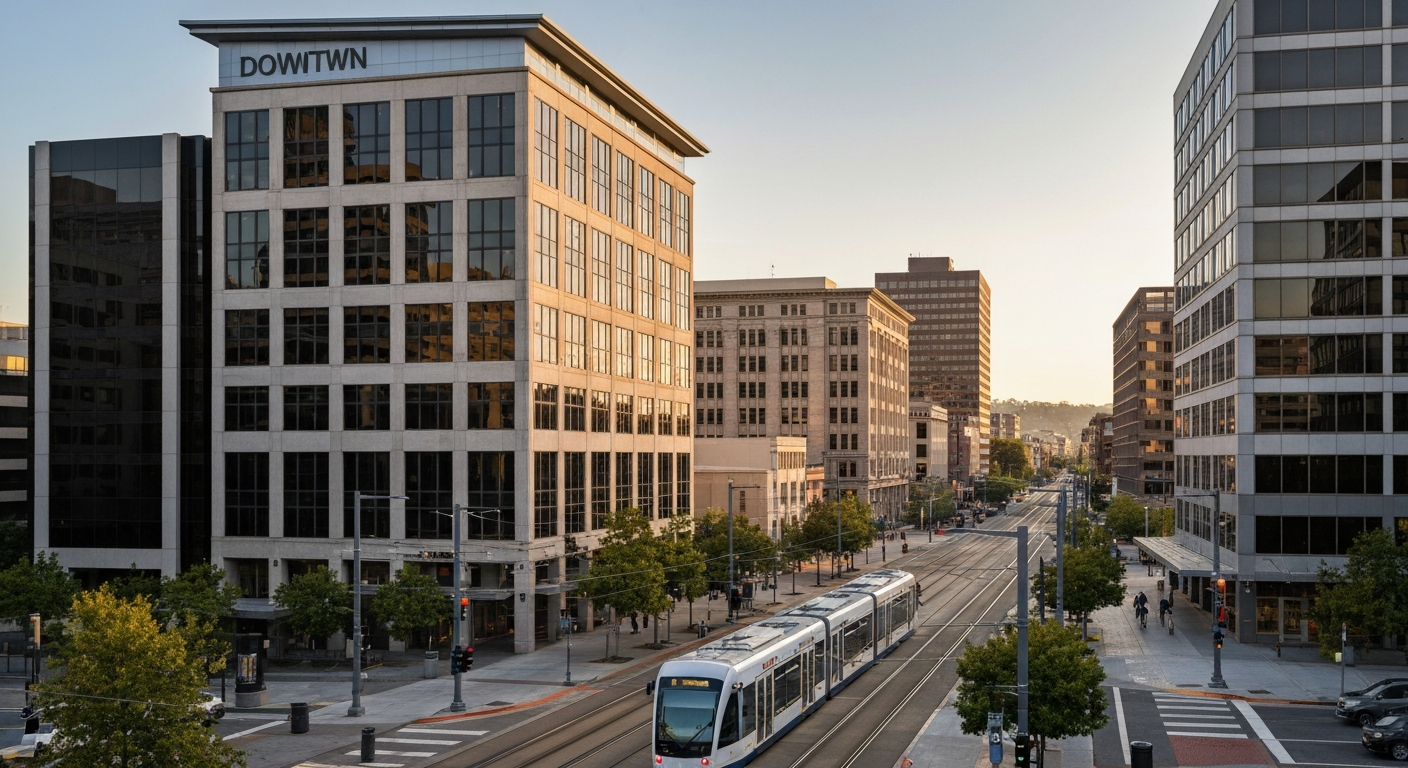
- Downtown San Jose: Revitalized in recent years with new office development, restaurants, and entertainment venues. The VTA light rail hub provides transit access. Google’s planned Downtown West development will further transform the area.
- North San Jose: Tech corridor with large office parks and campuses. Home to many tech companies’ satellite offices. Higher commercial rents but direct access to the tech ecosystem.
- Santana Row / Valley Fair: Premium retail and dining district. High foot traffic and affluent customer base, but rents to match.
- Willow Glen: Charming neighborhood commercial district popular with independent retail, restaurants, and professional services. Community-oriented customer base.
- Alum Rock and East San Jose: Lower commercial rents, diverse community, and opportunities to serve an underserved market. Growing entrepreneurial activity.
- Berryessa: Near the BART extension station, this area is seeing new development and commercial activity. Transit access is improving, making it an interesting bet for businesses that want to be positioned for growth.
- South San Jose (Blossom Valley, Almaden): Suburban residential areas with neighborhood commercial centers. Family-oriented services, healthcare, and food businesses serve a stable customer base.
What It Costs to Start
Here’s the total government cost picture for a new business in San Jose.
State costs:
| Item | Cost |
|---|---|
| SOS filing (Articles of Organization) | $70 |
| Statement of Information | $20 |
| Franchise tax (FTB) | $800/year |
| EIN | Free |
| State subtotal | $890 |
City costs:
| Item | Cost |
|---|---|
| Business tax (employee-based, varies) | Check current rates at sanjoseca.gov |
| SB-1186 fee | $4 |
| City subtotal | Varies by employee count |
Total first-year government costs: $890 + city business tax + registered agent ($50-200). For a solo business, the total is likely in the $950-$1,100 range depending on the current rate schedule.
The costs that actually determine viability:
- Commercial rent: $3-7+ per square foot per month depending on location and type
- Talent: salaries in the Bay Area are 20-40% higher than the national average for comparable roles
- Sales tax: 9.375% — one of the highest in the state, affecting retail pricing strategies
For bootstrapped startups: San Jose’s co-working spaces, SBDC resources, and public library business services can significantly reduce your initial overhead. You don’t need a Santana Row office to start a business — you need customers. Use the city’s resources to keep costs low while you build revenue.
CCPA considerations: If your business handles consumer data — and in Silicon Valley, many do — the California Consumer Privacy Act applies once you cross certain thresholds. Even if you’re below the thresholds now, building privacy-compliant data practices from day one saves expensive retrofitting later.
Insurance requirements: California requires workers’ compensation insurance for any business with employees. General liability insurance is practically essential in the Bay Area’s litigious environment. Professional liability (E&O) insurance is critical for consultants, developers, and service providers. Budget $500-$3,000 per year for basic coverage depending on your industry.
Banking: Open a business bank account early. San Jose has strong options including Silicon Valley Bank (now part of First Citizens), Heritage Bank of Commerce, and major national banks. A separate business account simplifies your bookkeeping and establishes your business as a distinct entity from day one.
The bootstrap advantage in San Jose: While San Jose is expensive, it’s meaningfully cheaper than San Francisco and parts of the Peninsula. A startup that can’t afford a SF lease might find workable space in East San Jose or South San Jose at rents that are 30-40% lower. You still get the Silicon Valley address, the proximity to tech companies, and access to Bay Area talent — just without the SF premium. Many of the most successful Silicon Valley companies started in garages and spare bedrooms precisely because the local market validated their concept without requiring premium commercial space.
San Jose’s employee-based business tax keeps the city layer simple. The $800 state franchise tax is the cost you can’t avoid anywhere in California. The real question isn’t whether you can afford San Jose’s government fees — it’s whether your business model works in a market where everything from rent to labor to a sandwich at lunch costs more than most of the country. If your business benefits from proximity to the tech ecosystem, a diverse million-person customer base, and access to Bay Area capital, San Jose rewards that bet.