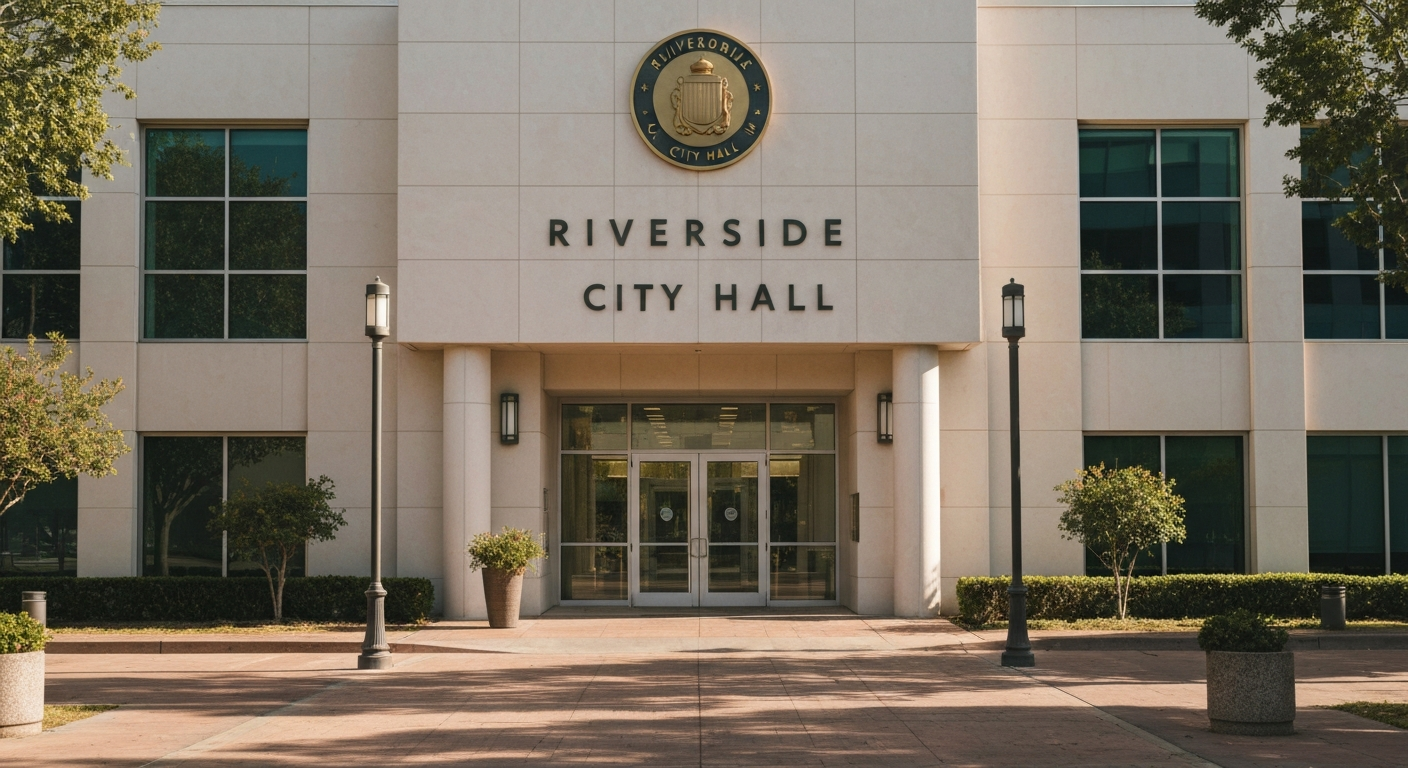
How to Get a Business License in Riverside, California
How to Get a Business License in Riverside, California
Before you unlock your door on your first day of business in Riverside, you need a piece of paper from the city. Riverside doesn’t call it a “business license.” It calls it a business tax certificate. Same function. Different name. And if you’re coming from another state or another California city, the rules here are specific enough that generic guides won’t cut it.
This is the exact process: where to apply, what it costs, and what happens before you even walk into the Finance Department.
What Riverside Requires vs. What California Requires
Here’s the first point of confusion: California has no statewide business license. Zero. You won’t get one from the Secretary of State. You won’t get one from Sacramento.
What you will get is a city-level requirement. Riverside requires one. So does Los Angeles. So does San Francisco. But each city’s rules, rates, and application process are different.
In Riverside, that requirement is called a business tax certificate. It functions as both your operating permit and your local tax registration. You cannot legally operate a business within Riverside city limits without it.
This certificate is separate from—and in addition to—three other state-level registrations you’ll need:
- The $800 Franchise Tax (due to California’s Franchise Tax Board annually, even if you make zero dollars)
- Your Seller’s Permit (if you sell tangible goods—free from the California Department of Tax and Fee Administration)
- Your LLC or corporation formation documents (filed with the California Secretary of State)
The business tax certificate covers your Riverside city operating permission only. It does not replace these state requirements. You need all of them.
The Prerequisite Chain
You can’t apply for a Riverside business tax certificate in a vacuum. The city expects you to have already completed the foundational business registration steps. Do them in this order.
Step 1: Form your business entity
If you’re forming an LLC, file your Articles of Organization with the California Secretary of State at bizfileOnline.sos.ca.gov. Cost: $70. If you’re incorporating, the fee is $100. You’ll receive a confirmation number and formation documents. Keep these—you’ll need them when you apply for your Riverside certificate.
Step 2: Get your EIN
The IRS assigns you a free Employer Identification Number. You need this even if you have no employees. Apply at irs.gov/ein. It takes 15 minutes online, and you’ll have a number immediately (or within two business days if you apply by phone). Write it down.
Step 3: Register for a Seller’s Permit (if applicable)
If you’re selling tangible goods—inventory, products, anything physical—you must register for a California Seller’s Permit. It’s free. Register at cdtfa.ca.gov. The California Department of Tax and Fee Administration will mail you a permit number. If you’re a service-only business (consulting, landscaping, etc.), you may not need this, but confirm with the CDTFA to be safe.
Step 4: Pay the $800 Franchise Tax
Every LLC and corporation doing business in California pays an annual $800 Franchise Tax to the Franchise Tax Board. This is due by the 15th day of the 4th month after you form your entity (so if you form in January, it’s due by May 15). Yes, you pay it even in year one, even if you haven’t made a dollar. This is separate from your Riverside city tax. It’s a California requirement. Pay it at ftb.ca.gov or by mail.
Step 5: Apply for your Riverside business tax certificate
Now you’re ready. You have your state entity, your EIN, your Seller’s Permit (if needed), and you’ve paid the Franchise Tax. Now apply to Riverside.
Applying for Your Business Tax Certificate
Riverside offers two ways to apply: online or in person. Online is faster.
Online Application
Go to riversideca.gov/businesstax or riverside.hdlgov.com (the city uses HDL Govtech as its online platform). Create an account, fill out the application form, and upload:
- Your LLC or corporation formation documents (or a certified copy from the Secretary of State)
- Your EIN letter from the IRS
- Your Seller’s Permit number (if you have one)
- A brief description of your business activities
The system will calculate your tax amount based on your business type and the information you provide. You’ll see the fee before you pay. Pay by credit card or electronic check. You’ll receive a confirmation email and can print your certificate immediately. Processing typically takes 2–3 business days for verification.
In-Person Application
If you prefer to apply in person or need clarification on your specific tax rate, visit the Riverside Finance Department:
Finance Department — Business Tax & License 3900 Main Street, 3rd Floor Riverside, CA 92522
Phone: (951) 826-5465 Fax: (951) 826-2356
Bring:
- Your LLC/corporation formation documents
- Your EIN letter
- Your Seller’s Permit (if applicable)
- A government-issued ID
- A description of your business activities (written or verbal is fine)
Staff will walk you through the calculation, tell you your exact fee, and you can often pay and receive your certificate the same day. No appointment required, but arrive early—the office can get busy.
How the Business Tax Is Calculated
This is where Riverside’s system gets complicated—and where many business guides gloss over the details.
Riverside doesn’t charge a flat rate. There is no “$200 business license” in Riverside. Instead, the city uses a variable rate schedule that depends entirely on your business type.
Each business category—grocery stores, medical offices, contractors, rental properties, salons, manufacturers, nonprofits, etc.—has its own calculation method. Some are based on gross receipts. Some are based on the number of employees. Some are based on the number of vehicles. Some are flat rates. Many use a combination.
Here’s an example: A general contractor might pay a base fee plus an increment for each vehicle they operate. A salon might pay a base fee plus an increment for each chair or station. A rental property owner pays based on gross rental income. A nonprofit might pay a reduced or flat rate. A retail store might be charged based on gross receipts up to a certain threshold.
Each category also has a minimum tax—a floor below which you won’t go, regardless of your actual size.
The Finance Department calculates your specific fee when you submit your application. You do not guess. You do not estimate. The city determines it based on what you tell them about your business and the rate schedule. You’ll see the amount due before you pay it.
If you’re unsure which category applies to you, call the Finance Department at (951) 826-5465 and describe your business. They will tell you your category and approximate fee. Or ask during your online application process—the system will guide you.
For the current complete rate schedule (which is detailed and worth reading if you want to see the full breakdown), visit riversideca.gov/finance.
Special case: Rental property owners
If you own residential or commercial rental property within Riverside, your business tax is calculated based on your gross rental receipts. Even if you own the property but lease it out, you need a business tax certificate.
Zoning and Location
Your business location matters, and Riverside’s zoning code is strict about what can operate where.
Commercial zoning
Your physical location must be zoned appropriately for your business type. You cannot operate a restaurant in a purely residential zone. You cannot run a manufacturing facility in a commercial office park. Before you sign a lease, ask the property owner or broker what the zoning designation is, then verify it aligns with your business. Check with the Community & Economic Development Department at (951) 826-5700 if you’re unsure.
Home-based businesses
If you’re running a business from your home—a consulting practice, a freelance design studio, a small e-commerce operation—Riverside may require a home occupation permit in addition to your business tax certificate. Not all home businesses need one, but many do. Contact the Community & Economic Development Department to confirm whether your specific business qualifies for a home occupation or if you need a permit.
Building permits
If you’re renovating, constructing, or modifying your location, you’ll need building permits from the Community Development Department. This is separate from your business tax certificate. Plan for this early—building permits can take weeks to months.
Major commercial corridors
If you’re looking for a location, Riverside’s main business areas are:
- University Avenue (retail, restaurants, services)
- Magnolia Avenue (retail, mixed-use)
- Arlington Avenue (retail, offices)
- Canyon Crest area (near UC Riverside—professional services, tech, education-adjacent)
- Downtown Riverside (mixed-use, growing revitalization)
These areas are well-zoned for commercial activity, but always confirm with the city before committing to a lease.
Renewal and Compliance
Getting your business tax certificate is not a one-time event.
Annual renewal
Your Riverside business tax certificate must be renewed every year. The city will mail you a renewal notice (or send an email, depending on how you originally applied). Renew online at riversideca.gov/businesstax or in person at the Finance Department. The renewal fee is calculated the same way as your initial application—based on your business type and current activity.
Late penalties
Operating with an expired certificate exposes you to penalties and potential fines. The city takes this seriously. Renew on time.
Keep state registrations current
While you’re renewing your Riverside certificate, don’t forget to:
- Renew your Seller’s Permit annually with the California Department of Tax and Fee Administration (if you have one)
- Pay your $800 Franchise Tax annually to the Franchise Tax Board
- File your Statement of Information biennially with the California Secretary of State (Form LLC-12 or SI-100, depending on your entity type)
Missing any of these creates separate liability with the state.
Display your certificate
Once you have your certificate, keep it displayed at your place of business. Inspectors and the public should be able to see it.
Additional resources
The Greater Riverside Chambers of Commerce is a useful resource for local business support, networking, and guidance on city-specific requirements. They can also help you understand Riverside’s broader business community and connect you with other owners.
Your business tax certificate is the Riverside key. Without it, you’re operating illegally, regardless of your state registrations. The good news: the process is straightforward once you know the steps and the terminology. Form your entity, get your EIN, handle the state requirements, then apply to Riverside. The Finance Department is helpful and responsive. You’ll have your certificate within days.