How to Start a Business in Long Beach, California
How to Start a Business in Long Beach, California
Long Beach is California’s seventh-largest city, and if you’re thinking about launching a business there, you’re looking at a completely different ecosystem than Los Angeles proper. The Port of Long Beach isn’t just a backdrop — it’s the economic engine. The city runs its own health department, something only two other California cities do. And the tax structure? It’s built around a flat base plus per-employee fees, not the gross receipts model that catches most people off guard.
This matters because the conventional “how to start a business in California” guides miss what makes Long Beach distinct. You’re not just dealing with state rules. You’re working with a port-driven logistics market, a local health authority that moves faster than county systems, and a tax formula that rewards you for knowing exactly how many people you’ll hire.
Here’s what you actually need to do.
Why Start a Business in Long Beach?
The size and the growth story
Long Beach’s population sits at approximately 458,800 as of 2024, and it’s declining slightly at -0.82% annually. That might sound like a warning sign, but it’s not the full picture. The broader LA-Long Beach-Anaheim metropolitan area contains 12.9 million people. Your customer base isn’t limited to city limits. Median household income in Long Beach is $87,430, growing at 6.3% year-over-year — that’s meaningful purchasing power in a region where people are spending more, not less.
The port economy
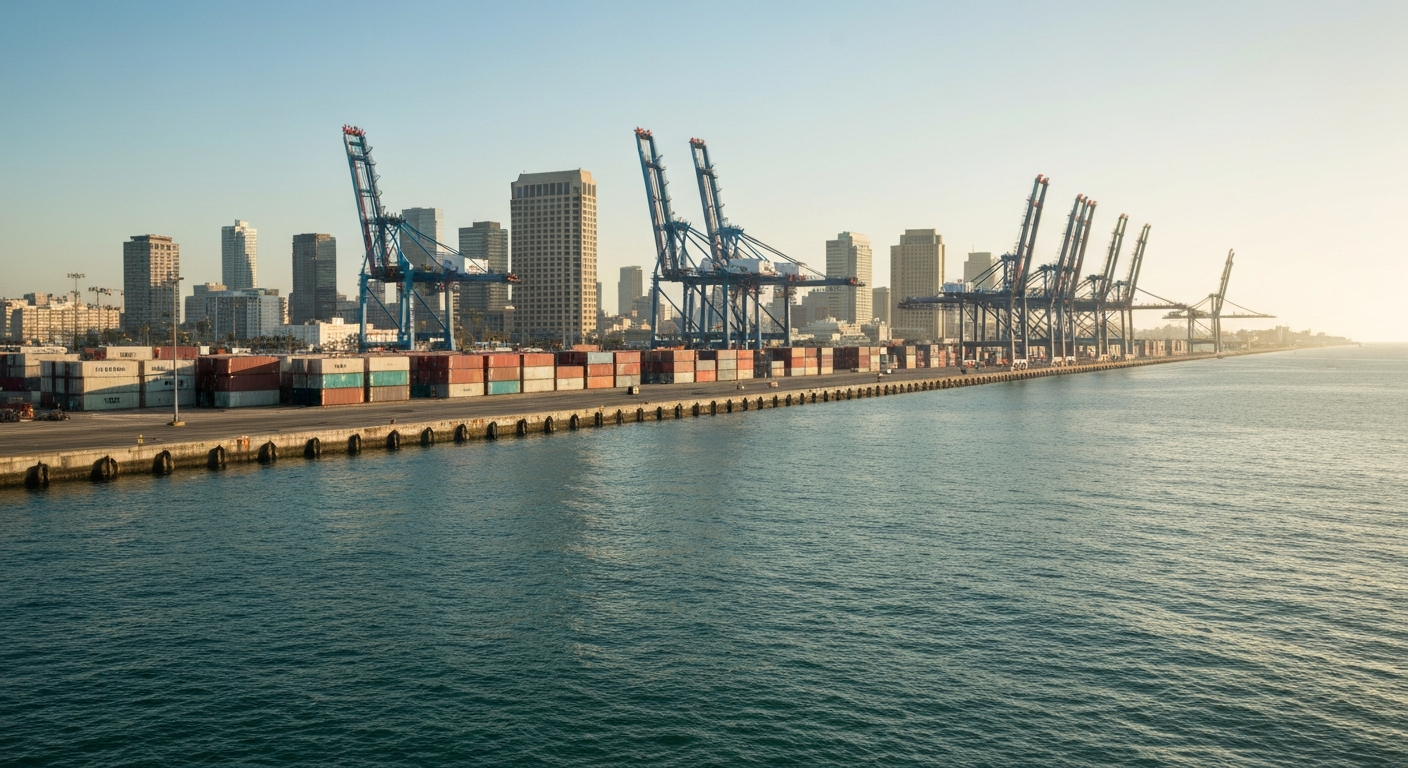
The Port of Long Beach and the adjacent Port of Los Angeles together handle roughly 39% of the nation’s maritime international trade. The Port of Long Beach alone moved $140 billion in annual trade value. That’s not theoretical — it translates to 51,090 jobs directly in Long Beach and 394,220 across LA County. If you’re in logistics, warehousing, trucking, supply chain software, or last-mile delivery, you’re operating inside the second-busiest container port in the US. That’s not a competitive advantage. That’s your entire market.
Who else is hiring here
Boeing remains the largest private employer despite recent downsizing. Molina Healthcare, a major health insurance provider, has its headquarters in Long Beach. Denso manufactures auto parts at scale. California State University Long Beach and the City of Long Beach itself employ thousands. The aerospace sector, oil and gas operations, advanced manufacturing, and tourism round out the employment base. This isn’t a single-industry city — it’s diversified enough that multiple business models can find traction.
Tourism and convention traffic
Long Beach Convention Center and Anaheim Convention Center create a dual convention economy across the metro. Over 25 million tourists pass through the greater LA-Long Beach-Anaheim area annually. That’s why you’ll see hotels, restaurants, tour operators, and event services scaling in Long Beach even as the residential population edges down.
The independent health department advantage
Here’s the part that matters if you’re opening a food business, a restaurant, a catering operation, or anything that requires health permits: Long Beach operates its own Department of Health and Human Services. Only three California cities run independent public health operations — Long Beach, Pasadena, and Berkeley. Everyone else defers to county health departments.
For you, that means food permits come directly from the city’s Bureau of Environmental Health, not LA County. The response time is typically faster. The people reviewing your plans know Long Beach’s specific conditions and challenges. You’re not buried in a county-wide queue. Call the Bureau of Environmental Health directly at (562) 570-4132 or visit longbeach.gov/EH. Their address is 2525 Grand Ave, Long Beach, CA 90815.
There’s one exception: food trucks. They need a valid health permit from the County of LA Public Health Department first, then the city will issue the business license. That’s a state-level rule, not Long Beach specific, but it’s worth knowing upfront.
Step 1: Choose Your Business Structure
You have two main options: LLC or corporation. For most startups, an LLC is simpler.
Limited Liability Company (LLC)
File your Articles of Organization with California’s Secretary of State through bizfileOnline.sos.ca.gov. The filing fee is $70. You’ll also need to file a Statement of Information within 90 days of formation, then biennially after that. The Statement of Information costs $20 each time.
Here’s the part that surprises people: California charges an $800 annual Franchise Tax to the Franchise Tax Board (FTB), and it applies to every LLC doing business in the state, regardless of whether you make a profit. That first-year exemption (AB 85) expired on December 31, 2023. It’s gone. The $800 is due by the 15th day of the 4th month after formation in your first year, then April 15 annually. On top of that, if your gross income exceeds $250,000, you owe an additional LLC fee ranging from $900 to $11,790 depending on revenue tier.
Corporation
Incorporating costs $100 to file Articles of Incorporation with the state. Corporations also pay the same $800 annual Franchise Tax plus additional fees based on gross income. For most new businesses, a corporation creates unnecessary complexity and expense. Unless you have specific liability concerns or investor requirements, an LLC is the better choice.
Why structure matters for Long Beach specifically
If you’re operating in logistics, supply chain, or port-adjacent services, liability protection is critical. You’re dealing with high-value goods movement, multiple parties, and potential claims. An LLC or corporation shields your personal assets if something goes wrong. Operating as a sole proprietor in this environment is financial recklessness.
Step 2: State Tax Registration
Before you can legally operate in California, you need three things from the state.
Get an EIN from the IRS
Visit irs.gov/ein. It’s free. This is your federal employer identification number. You’ll need it to open a business bank account, file taxes, and hire employees. You can apply online and get a number instantly.
Register for a Seller’s Permit with CDTFA
If you’re selling tangible goods — products, inventory, merchandise — you need to register for a Seller’s Permit with California’s Department of Tax and Fee Administration. Go to cdtfa.ca.gov. It’s free. You’ll collect and remit sales tax on every transaction. In Long Beach specifically, the combined sales tax rate is 10.5% as of April 1, 2025. That breaks down as 6.00% California state + 0.25% Los Angeles County + 1.00% Long Beach + 3.25% special district taxes. It’s higher than the statewide base of 7.25%, but still lower than Oakland’s 10.75%.
Register with EDD if you’re hiring
If you have employees, you must register with California’s Employment Development Department. They handle payroll taxes, unemployment insurance, and state disability insurance. Do this before your first hire.
Understand AB5 before you hire independent contractors
California’s AB5 law makes it nearly impossible to classify someone as an independent contractor. The state applies a three-part test (the “ABC test”), and most working relationships fail it. If you’re in logistics and thinking about hiring drivers or warehouse workers as 1099 contractors, stop. California will classify them as employees and you’ll face wage theft penalties, back taxes, and litigation. Know the rules before you structure any working relationship.
Step 3: Get Your Long Beach Business License
Every business operating in Long Beach must obtain a business license. That includes home-based businesses and independent contractors. No exceptions.
Where to apply
Apply online, in person, or by mail. The Business License Division is located at 411 W. Ocean Boulevard in Long Beach City Hall. Phone: (562) 570-6211. Email: [email protected].
Timeline and requirements
Processing time is typically 2 weeks or less for standard businesses. Some license types require City Council approval and take longer. Depending on your industry, the city may require inspections or investigations before issuing your license. A food business might need a health department sign-off. A bar needs ABC approval. A construction company might need bonding verification. Plan ahead — don’t assume approval is automatic.
Long Beach Business License Tax Structure
This is where Long Beach differs significantly from other California cities, and it’s worth understanding thoroughly.
Long Beach doesn’t use a gross receipts tax model (where you pay based on your annual revenue). Instead, it uses a flat base fee plus a per-employee surcharge. This makes your costs very predictable — you know your tax liability before you open the doors. But it also means costs scale linearly with headcount.
In-city businesses (12-month license)
If you’re operating from a home office or as an independent contractor, your base fee is $252.84. If you’re operating from a commercial location, the base fee is $412.26. On top of that, you pay a per-employee surcharge ranging from $10.69 to $32.08 per employee, depending on your business type.
Out-of-city businesses
If you’re based outside Long Beach but doing business there (serving clients, making deliveries, operating a satellite office), your base fee is $458.35 for a 12-month license, plus $23.80 per employee.
Shorter-term licenses
If you’re not ready for a full year, Long Beach offers 3-month licenses ($114.59 base), 6-month licenses ($229.17 base), and 9-month licenses ($343.76 base). Each also includes the per-employee surcharge.
The ADA fee
Add $4.00 to every license type. This is a state-mandated Americans with Disabilities Act fee.
Why this structure matters
Compare this to a gross receipts city like Oakland, where a business earning $500,000 in revenue might pay $5,000 or more in annual tax, while a business earning $100,000 might pay $1,000. In Long Beach, your tax is determined by how many people you employ, not how much money you make. A solo consultant in a home office pays $252.84 + $10.69 = $263.53 annually. A logistics company with 50 employees pays $412.26 base + (50 × $32.08) = $2,216.26. It’s transparent. You know the number. But it rewards lean operations and penalizes rapid hiring.
Sales Tax
Long Beach’s combined sales tax rate is 10.5% effective April 1, 2025. That’s higher than the California statewide base of 7.25% but reasonable for the LA area.
The breakdown: 6.00% California state tax + 0.25% Los Angeles County + 1.00% Long Beach local tax + 3.25% special district taxes (which includes transit, metro, and other regional initiatives).
You collect this tax from customers and remit it to CDTFA monthly, quarterly, or annually depending on your sales volume. Most new businesses start with quarterly filing. Register for your Seller’s Permit before you make your first sale.
The Independent Health Department Advantage
This deserves its own section because it’s genuinely unusual and genuinely valuable if you’re in food service, beverage, or any health-regulated business.
Long Beach operates its own Department of Health and Human Services. The Bureau of Environmental Health handles food permits, facility inspections, and health code compliance. Phone: (562) 570-4132. Address: 2525 Grand Ave, Long Beach, CA 90815. Website: longbeach.gov/EH.
Most California cities of Long Beach’s size defer to their county health department. LA County Health Department processes permits for dozens of municipalities. Response times are slower. Rules are interpreted at county scale, not locally. Pasadena and Berkeley also run independent departments, but Long Beach is the only one in the LA area.
For a restaurant owner, this means your permit application goes to a team that knows Long Beach’s commercial kitchen standards, local food culture, and specific challenges. They’re responsive. You can call and speak to the actual person reviewing your plans, not navigate a county-wide queue.
For a meal prep company or a specialty food manufacturer, the city’s expertise in Long Beach-specific logistics (proximity to the port, imported ingredients, unique supply chains) can actually streamline your approval process.
Again: food trucks are an exception. They need LA County Health Department approval first.
Costs at a Glance
Here’s what you’ll pay in government fees to get a standard LLC up and running in Long Beach in your first year.
- LLC filing with California Secretary of State: $70 (one-time)
- Statement of Information: $20 (due within 90 days, then every two years)
- California Franchise Tax: $800 (due by the 15th day of the 4th month after formation, then annually on April 15)
- Long Beach business license (commercial location, no employees): $412.26 base + $4.00 ADA fee = $416.26
- Seller’s Permit: Free
- EIN: Free
Total first-year government fees for a solo LLC in a commercial space: approximately $1,306.26.
If you’re operating from home as an independent contractor with no employees, subtract $159.42 (the difference between the home-based and commercial base fees). If you’re hiring employees, add $10.69 to $32.08 per person depending on your business type.
This doesn’t include professional services (accountant, attorney, business formation service), insurance, rent, or equipment. But for pure government registration and licensing, this is your baseline.
What Comes Next
You’ve chosen your structure, registered with the state, and obtained your Long Beach business license. You have an EIN, a Seller’s Permit (if applicable), and an understanding of your tax obligations.
Before you open, verify any industry-specific requirements. Food businesses need health permits. Bars need ABC licenses. Construction companies need bonding. Salons need cosmetology licenses. Call the city’s Business License Division at (562) 570-6211 and ask what applies to you. They’ll tell you what else is required and where to apply.
If you’re in logistics or port-adjacent services, familiarize yourself with the Port of Long Beach’s cargo handling regulations and driver requirements. If you’re in tourism or hospitality, understand the city’s event permitting process. If you’re in aerospace or advanced manufacturing, know which city departments oversee facilities and safety.
Long Beach’s economy is built on specificity — serving the port, serving the region’s 12.9 million people, serving the 25 million tourists who pass through. The more precisely you understand your market and your regulatory environment, the faster you’ll move from filing paperwork to actual business.